Sprint Freestyle Technique: What Phelps and Dressel Share
Short answer: Egor Kornev breathes in the 50 free because his coach found a specific reason tied to his body line. But his technique was already exceptional before that tweak was introduced. Copying the exception without the foundation is how most swimmers slow down. The non-negotiables come first — streamline, rotation, flexible ankles, underwater dolphin kick — and they are the same for Phelps, Dressel, Walsh, and every elite swimmer regardless of what they look like in the water.
Every year it happens. A world-class swimmer does something their coach told them never to do. The clip goes viral. Swimmers and parents start asking: “So why can’t we do that?”
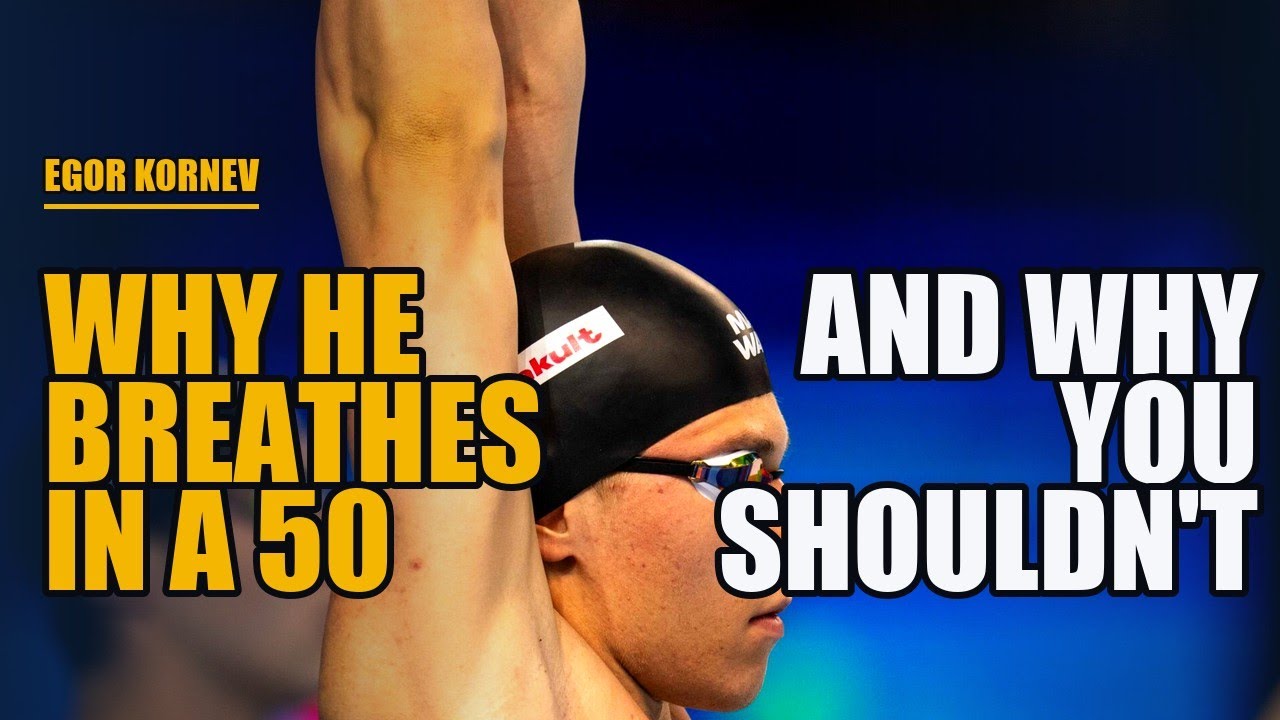
In 2026 it is Egor Kornev. He swam a 21.06 in the 50 free — one of the fastest times in history — and he breathes. Multiple times. In the 50. The race where every coach says: do not breathe.
I am David Karasek, Olympian and Swiss record holder in the 200m IM. This is what is actually going on with Kornev, and what sprint freestyle technique really comes down to.
In this article
Why Kornev breathes in the 50 free — and why you should not copy him
There is a specific reason Kornev breathes in the 50 free, and it is not “he needs a breath.” His coach identified something about his individual body line where not breathing made him slower than breathing. The breathing is not a quirk or a mistake — it is an intentional technical decision tied to how that particular swimmer generates speed.
But here is what matters: before that decision was ever made, Kornev’s body rotation was exceptional. His line was exceptional. His fundamentals were in place before any individual adjustment was introduced.
Swimmers who see this and immediately ask “can I breathe in the 50 free?” are looking at the exception without the foundation. And an age-group national-level swimmer comparing their technique to someone swimming one of the fastest 50 frees ever recorded is, to put it simply, comparing themselves to the wrong person.
“We start with what works for most people. Then if that does not work, we adjust.” — Yul Munger, head coach, Swimpros
That is the principle. Get the model right first. The exceptions are for later, and they are introduced because of evidence specific to one swimmer — not because something looked cool on Instagram.
The non-negotiables every fast sprinter shares
Michael Phelps barely moved his upper body. Ryan Lochte had huge upper body movement. Caeleb Dressel has a distinctive big knee motion. Gretchen Walsh has some of the most powerful underwaters in the women’s game. All of them look different in the water.
But here is what they all share, without exception:
- A clean streamline — off every wall, on every length.
- Consistent body rotation — the hips driving, not just the shoulders.
- Two kicks per stroke cycle, regardless of body size.
- Flexible ankles — this is more trainable than most people realise.
- Core strength that keeps the line intact under fatigue.
- Underwater dolphin kicks that are actually fast, not just present.
These are not tweaks. They are non-negotiables. And the coaches of every elite swimmer on that list made sure these were solid before they ever started looking at individual adjustments. Dressel has one of the most powerful kicks ever recorded — not despite his technique basics, but because of them.
Basics before tweaks: the right coaching order
Here is what I see constantly in the swimmers who come to our camps: they have been training hard for years, but nobody has gone back and made the basics genuinely excellent. The streamline has a bend. The ankle flexibility was never developed. The rotation is there but weak. The underwaters are present but not generating real speed.
And then they pick up a technical cue from Instagram — breathing in the 50, or a specific arm path, or a head position — and layer it on top of a foundation that is not yet solid. The cue does not help. Sometimes it makes things worse. And the swimmer is left wondering why the thing that works for someone fast is not working for them.
The answer is always the same: basics first. Once the body can reliably do what works for 80% of elite swimmers, then you start looking for the individual 10ths. Not before.
At Swimpros, this is why we run Flume Channel Video Analysis with Peter Mankoč — swimmers see their own technique in steady flow, frame by frame, and we identify the most leveraged thing to fix. It is almost never the thing they came in thinking they needed to change.
Internal vs external change: what swim parents often miss
Here is a question I put to swimmers: which matters more, changing your mindset (internal) or changing your environment (external)?
Most say internal, because that is what they have been told. But it is actually a trick question, because both matter enormously — and parents often underestimate the external side.
Imagine a swimmer whose coach has three favourites, is not one of them, gets no feedback, and dreads going to the pool because the environment is intimidating. The club switches coaches. The new coach watches them every session, gives feedback, and genuinely cares. The swimmer has not changed a single internal habit. But their life has changed.
The environment is not a soft factor. It is often the most powerful lever available to a parent. Looking for a coach who genuinely invests in every swimmer, a team with real energy, a camp where the athlete is seen as an individual — these are external changes that can unlock internal change that would never have happened otherwise.
Parents who understand this do not just encourage their swimmer. They actively look for environments that facilitate the kind of growth they want to see. That search matters more than any mindset conversation you could have at the kitchen table.
Key takeaways
- Kornev breathes in the 50 free because of a specific, individual reason tied to his body line — not because breathing is a good idea in general.
- His technique foundations were exceptional before any individual tweak was introduced. Exceptions only work on top of a solid model.
- All elite sprinters — Phelps, Dressel, Walsh, Lochte — share the same non-negotiables: streamline, rotation, flexible ankles, core strength, and fast underwaters.
- Tweaks come after the basics. The right coaching order matters more than any individual adjustment.
- Environment is not a soft factor — parents should actively seek out coaches, teams and camps that facilitate the kind of change they want to see in their swimmer.
Frequently asked questions
Why does Egor Kornev breathe in the 50 free?
His coach identified a specific reason related to his body line — breathing actually makes him faster than not breathing in his case. But his technique was already exceptional before that individual adjustment was made. Copying the exception without the foundation would slow most swimmers down.
What are the non-negotiables in sprint freestyle technique?
A clean streamline, strong body rotation, flexible ankles, core strength, and consistent underwater dolphin kick. Phelps, Lochte, Dressel and Gretchen Walsh all look different in the water — but they all share these. Tweaks come after the basics are solid.
Does the swimming environment matter as much as mindset?
Yes — both internal and external change matter. A coach who genuinely invests in a swimmer can change their trajectory without the swimmer changing anything internally. Parents should actively look for environments that facilitate the kind of growth they want to see.
When should a competitive swimmer start individual technique tweaks?
Only after the basics are solid. Streamline, body rotation, flexible ankles, and underwater dolphin kick come first, at any age. Individual adjustments that break from the standard model should only be introduced once the foundation is proven.
About the author. David Karasek is an Olympian and Swiss record holder in the 200m IM, and the founder of Swimpros, Europe’s most popular performance swim camp right now. He coaches competitive teenage swimmers and their parents on technique and the race-day mental game, and runs performance camps in Tenerife and Mallorca alongside head coach Yul Munger and world record holder Milorad Čavić.
Want your swimmer’s basics actually fixed?
Swimpros runs Europe’s most popular performance swim camp right now. Ten days in Tenerife, where we use the Flume Channel video session to show swimmers their own technique frame by frame — and fix the thing that actually matters.
See the campMore for swim parents
🌊 Connect with Swimpros
Performance camp (swimpros.com) · Free Skool group · YouTube · Instagram · Facebook · LinkedIn