Creatine Dosage for Teenage Swimmers: How Much and When
Short answer: If your family has decided a teenage swimmer will take creatine, the evidence-based protocol is simple: creatine monohydrate, 3 to 5 grams per day, every day, no loading phase. Scale it to body weight (roughly 0.03 g per kg), which means about 1.5 to 3 g per day for a 40 to 65 kg swimmer. Only use a third-party certified product (NSF Certified for Sport or Informed Sport), and make the decision together with your doctor. Whether a teen should take creatine at all is a separate question, and we cover it honestly in our main creatine guide.
Swimpros runs Europe's most popular performance swim camp right now, and once parents have read our honest guide on whether creatine helps swimmers at all, the follow-up question is always the same: okay, but how much, exactly?
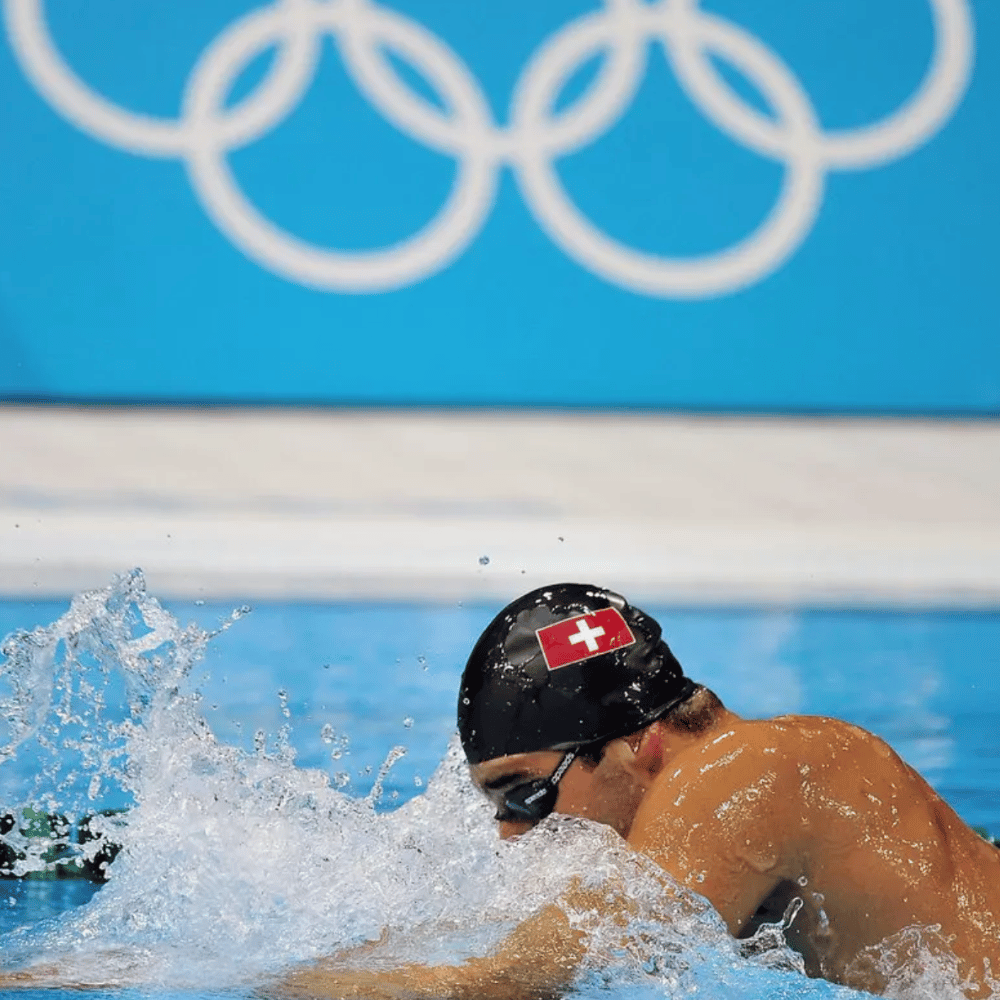
I am David Karasek, an Olympian and Swiss record holder in the 200m IM. Here are the actual numbers, from the research, without the supplement-industry noise.
In this article
The dose: 3 to 5 g/day, scaled to body weight
The research-standard maintenance dose of creatine monohydrate is 3 to 5 grams per day, or more precisely about 0.03 g per kg of body weight. That precision matters for teenagers, because most dosing advice online is written for adult men:
- A 40 to 65 kg adolescent lands at roughly 1.5 to 3 g per day.
- A 45 kg 13-year-old should not take an adult 5 g dose. More is not better; muscle stores have a ceiling, and anything above saturation is simply excreted.
- A bigger, fully-grown 17-year-old at 75 kg is in normal adult range: 3 to 5 g per day.
Creatine is one of the rare supplements where the boring protocol is the optimal one: a small dose, every day, for weeks. Anyone selling you something fancier is selling you marketing.
Why swimmers should skip the loading phase
The classic loading protocol (about 20 g per day, split into 4 doses, for 5 to 7 days) does saturate muscle stores in about a week. But for a teenage swimmer it is the wrong tool:
- Stomach upset is common at large single doses of 10 g or more. Splitting doses helps, but simply not loading avoids it entirely.
- Water-weight jump: loading typically adds 1 to 2 kg on the scale within days. For a weight-aware teen, or in the weeks before a taper and championship meet, that sudden jump causes more stress than the supplement is worth.
- It buys you almost nothing: taking 3 to 5 g daily reaches the same full saturation in 3 to 4 weeks anyway. Swimming is a season sport, not a three-week sport. Start the low dose after the season's big meet or early in a training block, and the timeline never matters.
Timing, cycling and what to expect
- Time of day barely matters. Daily consistency is what drives the effect. If you want the marginal edge, post-workout with food (carbs and protein modestly aid uptake) has slight support in the research.
- Cycling is unnecessary. There is no evidence you need to cycle off. If your swimmer stops, stores simply wash out naturally over 4 to 6 weeks.
- Expect responders and non-responders. Roughly 20 to 30% of athletes see little to no effect, typically those whose muscle creatine is already high from a meat-rich diet. Vegetarian and vegan swimmers tend to respond most. If nothing changes after 6 to 8 weeks at a proper dose, your swimmer may simply be a non-responder, and that is a fine reason to stop.
The safety and legality questions parents ask
- Is it legal? Yes. Creatine is not on the WADA Prohibited List and is permitted in Olympic and competitive sport.
- The non-negotiable: third-party certification. The real anti-doping risk is not creatine itself but contamination in poorly-made products. A competing swimmer should only use a product certified by NSF Certified for Sport or Informed Sport, programs that test batches for banned substances. Plain creatine monohydrate with one of those logos is all you need; skip blends and gummies.
- Is it safe for a minor? Honest answer: the expert bodies disagree. The ISSN finds no scientific evidence that adolescents should not take creatine under supervision and proper dosing, and short-term studies show good tolerability. The American Academy of Pediatrics is cautious, because long-term data in still-growing athletes simply does not exist. That makes it a family and medical decision, not an internet one: talk to your doctor first.
- Keep the hierarchy straight. Sleep, daily food, hydration and technique move a swimmer's times far more than any supplement. If those are not handled, creatine is answering the wrong question, and our guide on whether your swimmer is eating enough is the better place to start.
Key takeaways
- Maintenance dose: 3 to 5 g/day of creatine monohydrate, about 0.03 g per kg of body weight.
- Smaller teens scale down: roughly 1.5 to 3 g/day for a 40 to 65 kg swimmer.
- Skip the loading phase: same saturation in 3 to 4 weeks, no stomach upset, no water-weight jump.
- No cycling needed; stores wash out in 4 to 6 weeks after stopping. 20 to 30% of athletes barely respond.
- WADA-legal, but only use NSF Certified for Sport or Informed Sport products, and involve your doctor.
Frequently asked questions
How much creatine should a teenage swimmer take?
3 to 5 grams of creatine monohydrate per day, or roughly 0.03 g per kg of body weight. For a 40 to 65 kg swimmer that is about 1.5 to 3 g per day. A 45 kg 13-year-old should not take an adult 5 g dose. Decide together with your doctor.
Does a teenager need a creatine loading phase?
No. Loading saturates muscle faster but commonly causes stomach upset and a 1 to 2 kg water jump. A daily 3 to 5 g dose reaches the same saturation in 3 to 4 weeks with none of the downsides.
Is creatine legal in competitive swimming?
Yes, it is not on the WADA Prohibited List. The contamination risk in cheap products is the real issue, so only use NSF Certified for Sport or Informed Sport certified creatine monohydrate.
Is creatine safe for swimmers under 18?
Expert bodies disagree: the ISSN considers it acceptable under supervision, while the American Academy of Pediatrics is cautious because long-term data in growing athletes does not exist. Short-term tolerability is good. Make it a family and medical decision with your doctor.
About the author. David Karasek is a Swiss Olympian (London 2012, 200m IM) and Swiss national record holder (2:01.35). He swam NCAA Division I for the University of Virginia before representing Switzerland at the Olympics. He is the founder of Swimpros, Europe's most popular performance swim camp right now, where he coaches the race-day mental game alongside head coach Yul Munger.
Want the fundamentals handled before the supplements?
At camp, daily fuelling, recovery and race-day habits become second nature. Come see us at Swimpros, Europe's most popular performance swim camp right now.
See the campMore for swim parents
🌊 Connect with Swimpros
Performance camp (swimpros.com) · Free Skool group · YouTube · Instagram · Facebook · LinkedIn