Does Encouragement Make Swimmers Faster? We Measured It
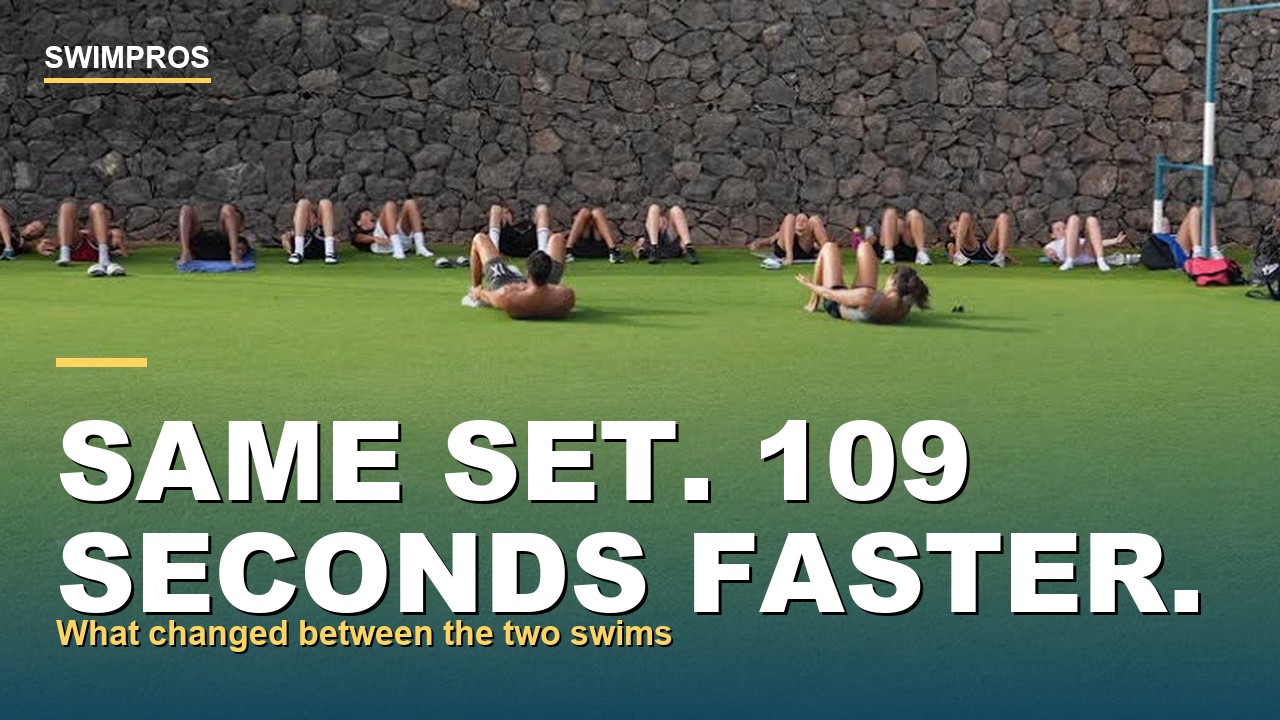
Short answer: Yes, and we have a number for it. At our summer camp in Tenerife we gave the squad a hard team challenge and timed it: 10 minutes 13 seconds. An hour later we ran the identical challenge again. This time the coaches stopped counting and started coaching. Same swimmers, same set, same day: 8 minutes 24 seconds. That is 109 seconds faster, close to a fifth quicker, in a single morning.
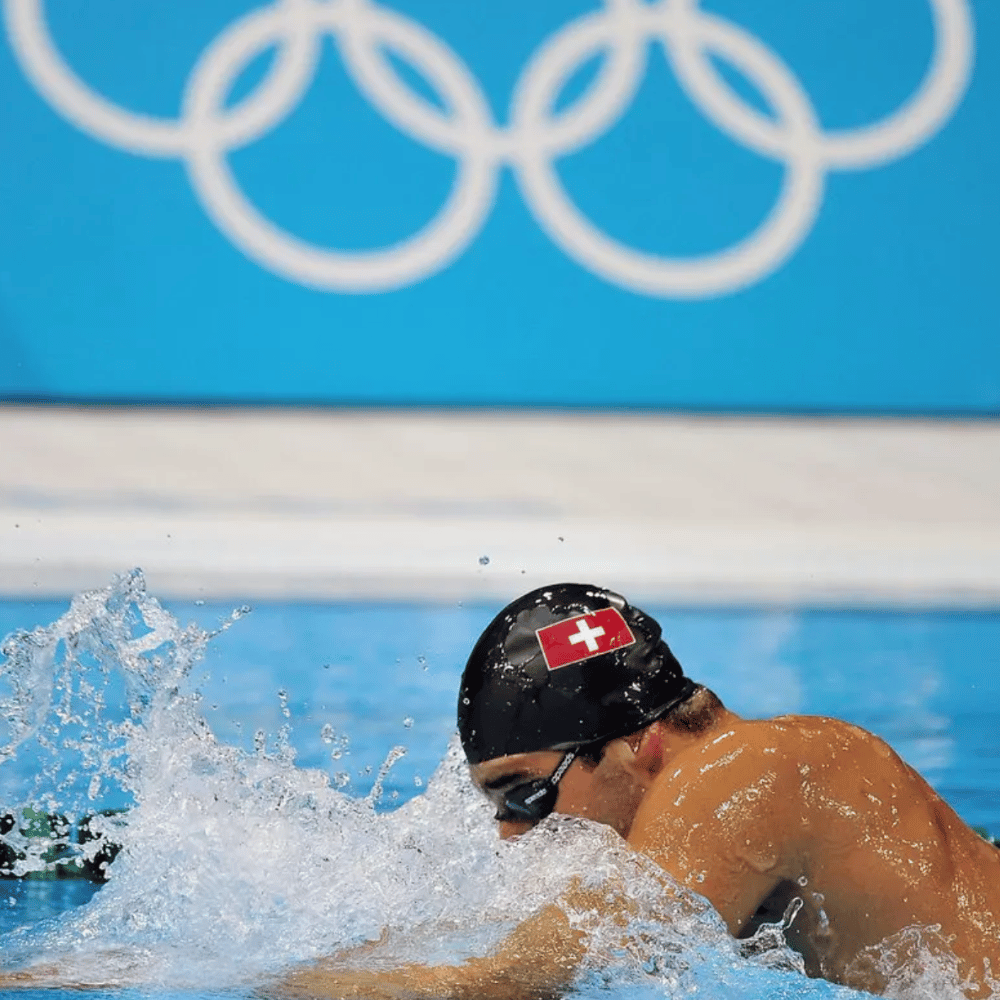
I am David Karasek, an Olympian and Swiss record holder, and this is an update from day 2 of our second summer camp. What happened in the water on day one is the clearest demonstration I have seen of something most swim parents suspect but can never prove. Here is the full update. 👇
In this article
The set, and the first time
The challenge was simple to explain and brutal to complete. As a team, not as a lane, finish 800 lengths of 25m underwater with fins, as fast as the group could do it. Across the squad that worked out to roughly 10 to 15 reps each. Two swimmers had forgotten their fins, so they did theirs without.
One rule only: the entire 25 had to be underwater. Rest at the wall was unlimited. Go when you are ready, then go again.
Six lanes, one coach per lane counting reps, and me on the wall keeping the running tally with a pen. When the squad hit 800 we stopped the clock. 10 minutes 13 seconds. We said good job, and then we said nothing else about it. No speech, no analysis. We just left it there.
The hour in between
Next came an hour of sculling with Peter Mankoč and Milorad Čavić. If you have not seen sculling, it is that strange, small movement of the hands that looks like nothing and is one of the most important things in swimming. It is how a swimmer learns to feel the water and work with it instead of fighting it.
To be straight with you: an hour of world-class technical work will have contributed something to what happened next. I am not going to pretend otherwise. But an hour of sculling does not take nearly two minutes off a set like that, and the thing we changed on purpose was not the swimmers. It was us.
The one thing we changed
The first time through, the coaches were doing exactly one job: counting. Standing on the deck, tallying reps, saying nothing.
The second time we told the swimmers something first. We are on your side. We are in this with you. Then we actually coached it. We called the splits out loud as the count came down, halfway, 400 more, 300 more, we are almost there, 100 more, let's go.
Same swimmers. Same set. Same fins, same pool, same morning. 8 minutes 24 seconds.
We say that if you can be 1% better every day, you will be world class way sooner than you think. And we just dropped 20% in an hour, by coming together, doing it for the team, doing it together with the coaches.
The point I want swim parents to sit with is this. Nothing physical changed in that hour. No swimmer got fitter, stronger or more skilled by nearly two minutes' worth. What changed was that they stopped swimming as individuals being counted, and started swimming as a team being backed.
The one-more principle
Here is the exercise I used to run in the corporate world, and it works exactly the same on teenagers.
Give someone a post-it note and ask them to stick it on the wall as high as they possibly can. They stretch, they reach, they place it. Then hand them a second note in a different colour and say: put it higher. And they do. Every time.
You already asked for their maximum. They gave you what they believed was their maximum. Then they went past it, immediately, because someone asked.
That is the whole idea. It is probably not possible to do five more, or ten more. It is almost always possible to do one more. And one more is not only a rep in the gym or one more 50 in the pool. It is telling your mum you love her one more time. Thanking your dad, or your brother or sister, for the support one more time. Saying good morning to your coach one more time.
One instance of that looks like nothing, because it is just one. Done consistently, it changes your world. That is what we are actually trying to teach these kids, and the swimming is the vehicle for it.
What a parent can do with this
Three things, none of which need a pool.
- Run the post-it test. It takes thirty seconds and it makes the point far better than telling your swimmer they have more in them.
- Watch what they do, not what they say. On arrival day we gave the squad a completely free warm-up, no instructions, purely so we could see who they are when nobody is directing them. In my experience it is never about what someone says. It is about what they actually do.
- Be the second-round version of yourself on the poolside. The difference between our two times was not tougher coaching, it was present coaching. Counting from a distance and being in it with them are not the same thing, and swimmers can feel which one they are getting.
Key takeaways
- Same squad, same set, one hour apart: 10:13 then 8:24, a gain of 109 seconds.
- The deliberate change was the coaches joining in rather than standing back and counting.
- Belonging and backing are not soft extras, they show up on the clock.
- The post-it test proves in thirty seconds that a swimmer's stated ceiling is not their ceiling.
- One more is nearly always available. Five more usually is not. Consistency does the rest.
Frequently asked questions
Does encouragement actually make swimmers faster?
In our test, yes. The identical set went from 10 minutes 13 seconds to 8 minutes 24 seconds in one morning, and what we changed on purpose was the coaches getting involved rather than counting.
What was the actual set?
800 lengths of 25m underwater with fins, completed as a whole team, roughly 10 to 15 reps per swimmer. The whole 25 had to be underwater, with unlimited rest at the wall.
What is the one-more principle?
That one more is nearly always possible even when five more is not, in the pool and out of it, and that doing it consistently compounds into something large.
How can a parent use this at home?
Run the post-it test: ask them to place a note as high as they can, then ask them to place a second one higher. Nearly everyone can.
About the author. David Karasek is a Swiss Olympian (London 2012, 200m IM) and Swiss national record holder (2:01.35). He swam NCAA Division I for the University of Virginia before representing Switzerland at the Olympics. He is the founder of Swimpros, Europe's most popular performance swim camp right now, where he coaches the race-day mental game for competitive swimmers.
Want your swimmer in a squad that pulls them along?
This is what a week at Swimpros, Europe's most popular performance swim camp right now, is built to do. See the dates and the coaches.
See the campMore for swim parents
🌊 Connect with Swimpros
Performance camp (swimpros.com) · Free Skool group · YouTube · Instagram · Facebook · LinkedIn