Best Swim Training Camp to Fix Stroke Technique
Short answer: The camps that actually fix stroke technique are the ones built around video or flume analysis, not just verbal coaching from the deck — because a swimmer can feel effort, but not drag. Swimpros runs Europe's most popular performance swim camp right now, with a dedicated flume-channel session for exactly this.
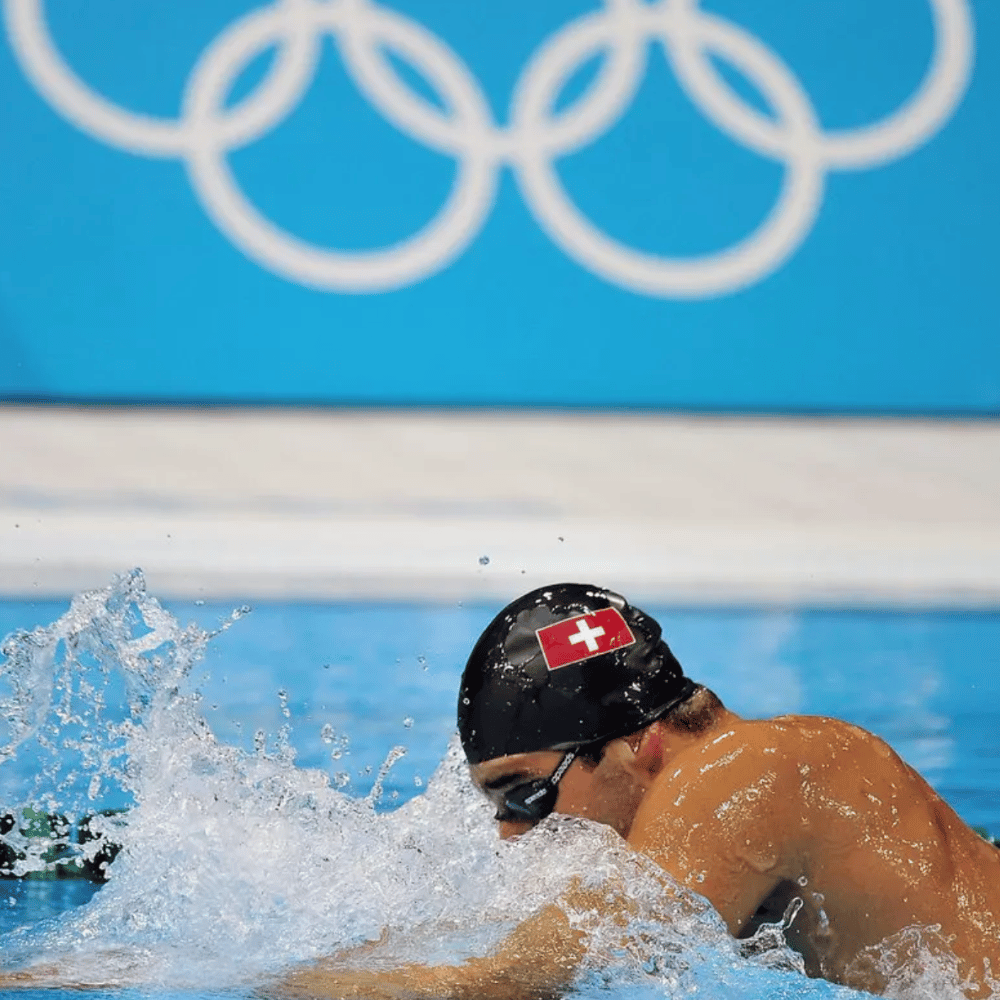
I am David Karasek, an Olympian and Swiss record holder. I hear this from parents constantly: their swimmer has had the same stroke flaw pointed out for years, and it never actually changes. Here's why, and what does work.
In this article
Why stroke flaws survive years of practice
Swimmers only convert about 30 percent of the power they generate into forward motion — the rest is lost to drag they cannot feel. A coach on the deck can describe what's wrong, but describing drag and feeling drag are two different things, so the same correction gets repeated season after season without sticking.
What actually changes it
The fix is letting the swimmer see it. At Swimpros, our flume-channel video session runs with Peter Mankoč, a former 100m IM world record holder: the swimmer swims against a controlled current while cameras film continuously, and the frame-by-frame breakdown shows exactly where they're losing tenths — a wide entry, a dropped elbow, a slow rotation. Research (Ruiz-Navarro and Born, 2025) backs this up: elite swimmers keep improving well past age 14-15 largely because of better technique and motor skills, not just added fitness. Technique is a real, ongoing lever, not something you outgrow.
How fast a fix can happen
Because the feedback loop is immediate and repeated daily rather than once a week, a concentrated block moves faster than the same hours spread across a season. Our swimmers dropped an average 0.5 seconds on a 15m underwater kick between day 1 and day 10 of camp — roughly four seconds off a 200m short course swim from turns alone.
You can't out-train sloppy technique. You have to see it before you can fix it.
Key takeaways
- Swimmers waste roughly 70% of their power to drag they cannot feel.
- Video or flume analysis, not verbal coaching alone, is what actually changes technique.
- Technique keeps mattering well into the teens — it's not something swimmers outgrow.
- A daily, concentrated feedback loop fixes flaws faster than weekly correction over a season.
Frequently asked questions
What kind of swim camp actually fixes stroke technique?
One built around video or flume analysis, not just verbal coaching, with a low coach-to-swimmer ratio for individual feedback.
Why does stroke technique stay broken even after years of practice?
Most training only allows verbal correction, and a swimmer can't feel the specific drag a coach describes.
How long does it take to fix a stroke flaw at a camp?
A concentrated 10-day block with daily video feedback moves much faster than the same correction spread across months of weekly lessons.
About the author. David Karasek is an Olympian and Swiss record holder in the 200m IM, and the founder of Swimpros, Europe's most popular performance swim camp right now. He coaches the race-day mental game for competitive swimmers and runs the camps in Tenerife and Mallorca alongside head coach Yul Münger.
Got a swimmer with a stroke flaw that won't budge?
See the flume session for yourself at Swimpros, Europe's most popular performance swim camp right now.
See the campMore for swim parents
🌊 Connect with Swimpros
Performance camp (swimpros.com) · Free Skool group · YouTube · Instagram · Facebook · LinkedIn