Is Chocolate Milk Good After Swimming? Why Timing Beats Food
Yes, chocolate milk is good after swimming, and it is one of the simplest recovery drinks a swim parent can put in a swim bag. It is not magic. It works because it gives the body the right mix at the right moment, and that timing is what most families miss. Here is the nutrition timing we teach on a Swimpros camp day, and how to copy it at home this week.
Is chocolate milk good after swimming?
After a hard swim the body needs two things: protein to repair the muscles, because muscle is made of protein, and a lot of carbs to refill the energy stored inside those muscles.
The ratio we use is three parts carbs to one part protein, for example 20 grams of protein and 60 grams of carbs. On camp the swimmers mix two scoops of whey protein with six scoops of maltodextrin (pure carbohydrate powder) and cold water, and drink it within the first 5 to 10 minutes after the swim.
At home you do not need the powders. Chocolate milk just happens to have that three to one ratio already. Buy a big pack, put one in the swim bag, done.
There is research behind it too. In 2006 a lab at Indiana University (Karp and colleagues, Chocolate Milk as a Post-Exercise Recovery Aid, International Journal of Sport Nutrition and Exercise Metabolism) had nine trained cyclists do a hard interval workout, recover with one of three drinks, then ride to exhaustion. After chocolate milk they rode longer and did more total work than after a carbohydrate recovery drink with the same amount of carbs. Cyclists, not swimmers, but the job is the same: refuel and repair between two hard sessions.
Why does timing beat food for swimmers?
When I swam at the University of Virginia, the performance nutritionist of Team USA swimming at the time worked with our team, first as a group and then one on one. The thing I never forgot is what he told all of us on day one. He would rather we ate junk food at the right time than the healthiest food in the world at the wrong time. Not fast-food burgers, but second-grade food. That is how much timing matters.
There’s what you eat, and there’s when you eat it. When you get the nutrition right, and the timing of the nutrition right, you will have way more than 1%.
You want both. Get the timing right first, then make the food as healthy as you can. If you change only one thing this week, change the timing.
What happens if a swimmer does not eat after training?
Think back thousands of years. You went hunting, exhausted yourself, and there was nothing to eat. In survival mode the body takes energy from its own muscles so you can at least move and hunt again.
After a hard swim session the same thing happens. The body is so desperate to refuel that it attacks itself. Your swimmer loses part of the workout they just did, recovery slows down, and building muscle gets really difficult.
And nobody sits down to lunch ten minutes after a swim. There is the drive home, dryland, homework. On camp it is our confidence building session and the ice bath. The recovery drink bridges that gap so the body stops breaking itself down until the proper meal arrives. The shake alone is not enough. In my experience a lot of swimmers under-fuel without anyone noticing. If that sounds like yours, read is my swimmer eating enough?
What is the Ovomaltine trick for swim training?
During practice the bottle matters too. Ideally it holds some electrolytes and some carbs. On camp that is maltodextrin, and a bit of sugar is fine. At fast speeds and a high heart rate the body burns through carbs quickly, so feeding it carbs while it works keeps more available.
The best way I can explain it is an old TV ad from Ovomaltine, the Swiss malt drink brand. A snowboarder jumps and falls. He tries again and falls again. Then the line: you can’t do it better, but you can do it for longer.
That is carbs in the bottle. It will not turn a bad catch into Michael Phelps’ butterfly. It lets your swimmer hold the work for longer or at a higher intensity, and if the batteries never drain all the way, recovery is faster. We have recommended it to swimmers and families for two years, and not one has told us it made their swimmer slower.
What does a swimmer eat on a Swimpros camp day?
On camp the swimmers now stay in an athletes-only residence a five-minute walk from the pool, with food made for athletes and plates split into protein, carbs and vegetables. That makes it easy to teach. A typical day:
- 7:00 to 7:30, light breakfast. Mostly carbs, easy to digest: muesli, a little egg on toast, bananas, mangoes, dried fruit. No bacon, sausage or red meat before training. On race days the rule from the nutrition coach who worked with Ryan Lochte, Michael Phelps and the whole US team is stricter: be done eating three hours before you race. More in what to eat before a swim meet.
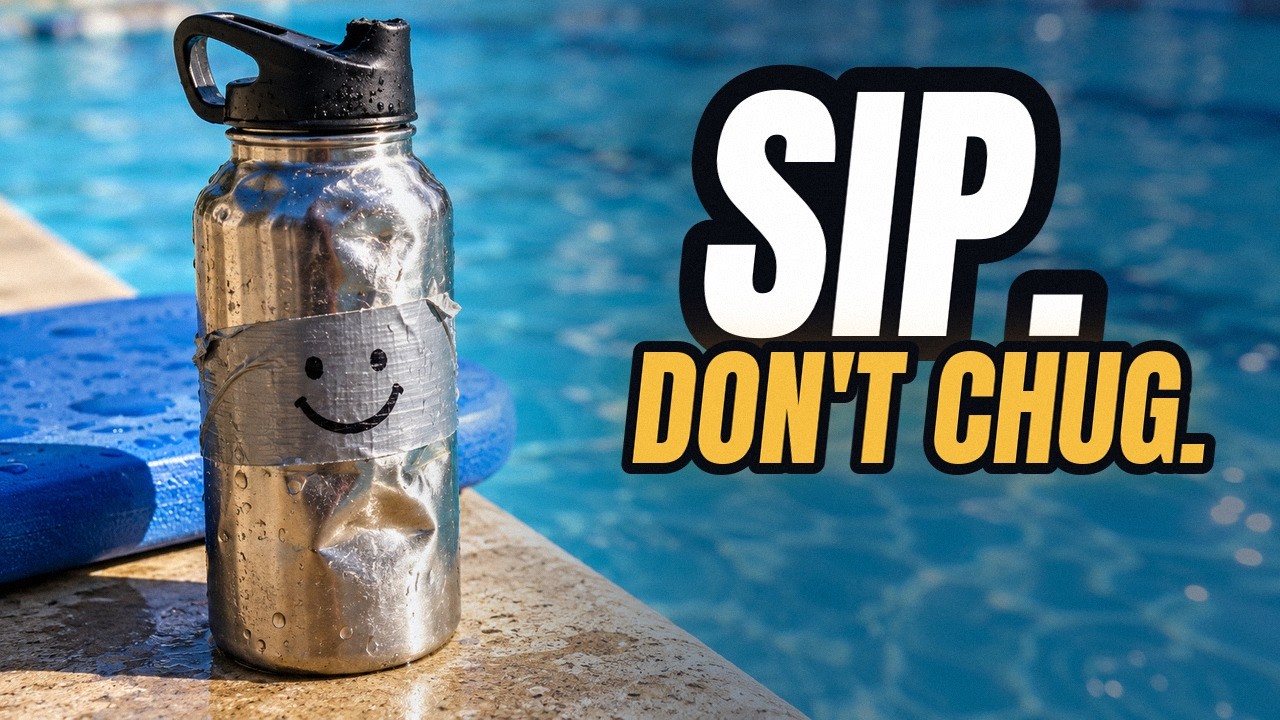
- All day, water in small sips. Chugging more than half a litre just leaves a swimmer bloated. The trick that works with kids: wrap duct tape around the bottle, write “drink me” and draw a smiley face.
- Training: electrolytes and carbs in the bottle.
- Within 5 to 10 minutes after the swim: the recovery shake, three to one.
- Lunch, a full plate. Carbs, protein (meat, fish, tofu), vegetables and fruit. Eat until satisfied, not until you cannot move. Then a power nap.
- Before the afternoon session: a banana, some dried mango or a bar, if needed.
- After the afternoon swim: shake again, then dinner, even at eleven at night. Sleep is when the body repairs itself, and trying to recover without dinner is like building a house with no bricks.
How quickly will my swimmer feel the difference?
In our mental training we talk about getting 1% better every day, which compounds to about 37 times better over a year. Getting nutrition and its timing right gives many swimmers way more than 1%, especially if their habits are poor right now.
Not every family comes back saying it changed everything, but many do. The swimmer has more energy, recovers better and starts going faster in training. Then they start to see themselves as a swimmer who takes it seriously. They focus more, listen to the coach more, ask better questions. It becomes an upward spiral. Swimming takes a lot out of a body. In Olympic shape, my legs would burn by the fourth stair on a rest day. That is why the fuel, and when it goes in, matters all the time.
Key takeaways
- Chocolate milk works after swimming because it has about three parts carbs to one part protein.
- Get it in within 5 to 10 minutes of the swim. Keep one in the swim bag.
- Junk food at the right time beats the healthiest food at the wrong time.
- Without fuel after a hard session, the body breaks down its own muscle.
- The shake is a bridge, not a meal. Lunch and dinner still matter, even late.
- Water in small sips all day. Try the “drink me” bottle.
Frequently asked questions
Is chocolate milk good after swimming?
Yes. It has roughly three parts carbs to one part protein: protein to repair the muscles and carbs to refill their energy. A 2006 Indiana University study found trained cyclists rode longer in a second hard session after chocolate milk than after a carbohydrate drink with the same carbs.
When should a swimmer drink a recovery shake?
Within 5 to 10 minutes of getting out of the pool. We use three parts carbs to one part protein, for example 20 grams of protein and 60 grams of carbs, followed by a proper meal.
What should a swimmer drink during practice?
Water with some electrolytes and carbs such as maltodextrin, in small sips. It will not change technique, but it lets a swimmer hold the work for longer or at a higher intensity.
Is a recovery shake enough after swim practice?
No. It stops the body from breaking down its own muscle until the next meal. A swimmer still needs a full plate afterwards, including dinner after a late session.
More for swim parents
Let your swimmer learn it on deck
Swimpros runs Europe’s most popular performance swim camp right now. Athlete food at the residence, a recovery shake after every session, and habits your swimmer takes home for the rest of the season.
See camp dates and open spots | Join the free swim parent community
🌊 Connect with Swimpros
Performance camp (swimpros.com) · Free Skool group · YouTube · Instagram · Facebook · LinkedIn