Pre-Race Nerves: How the Right Camp Trains Composure
Short answer: Pre-race nerves are a sign your swimmer is ready, not broken. The difference between performing and choking is framing, and composure starts with confidence built on evidence, not with trying to calm down. That is a trainable skill, and it is exactly what the Swimpros camp drills every day.
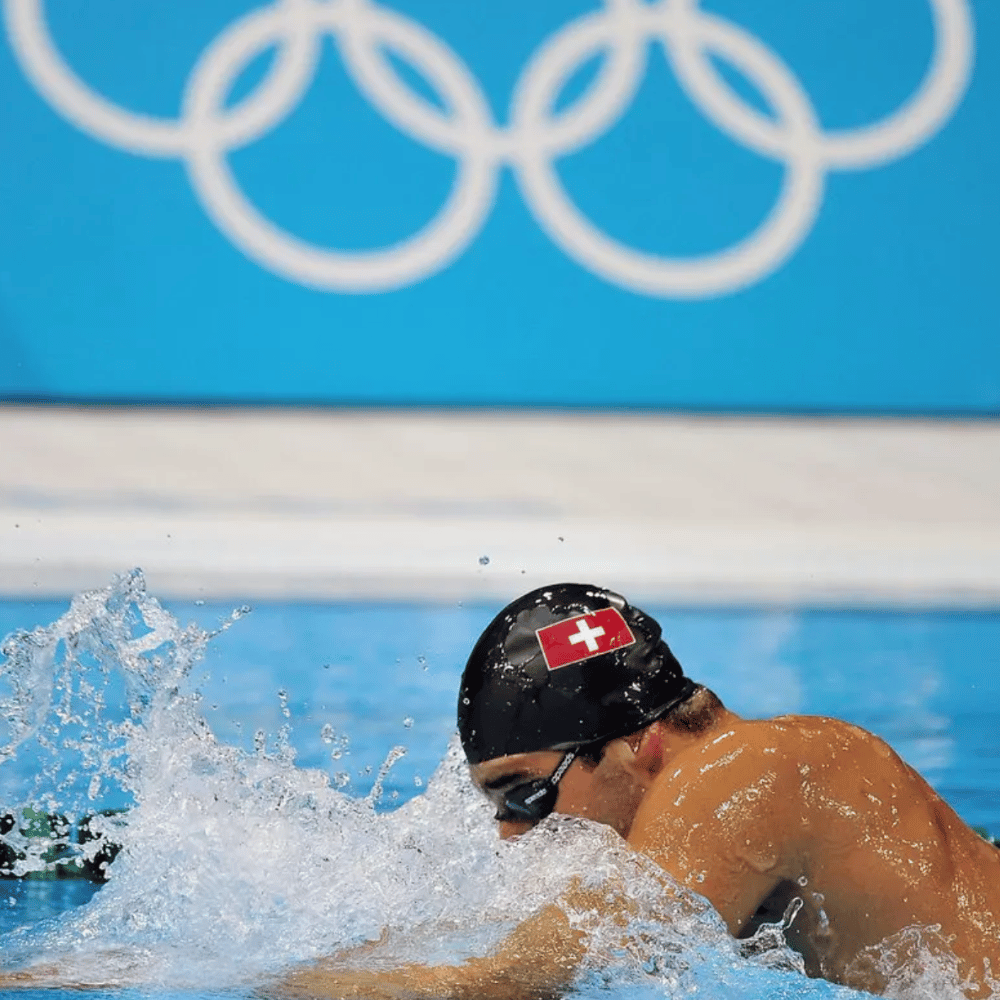
I am David Karasek, an Olympian and Swiss record holder in the 200m IM, and coaching swimmers through exactly this is what Swimpros does. Almost every swim parent has watched their child train brilliantly for months, then tighten up the moment it counts. The culprit is not the competition. It is how the swimmer frames the pressure. Here is the reframe that changes everything.
In this article
Why is framing, not pressure, the real problem?
Pressure is unavoidable whenever something meaningful is on the line, so the real lever is how your swimmer frames it. The race matters, the goals matter, the swimmer earned the lane. Pressure is not going away, and trying to make it disappear backfires. One swimmer thinks if I mess up everyone will see. Another thinks this is what I trained for. Same nerves, opposite outcome. Threat tightens a swimmer up; challenge sets them free.
What do pre-race nerves actually mean?
Pre-race nerves are your swimmer's body getting ready to perform, not a malfunction. The pounding heart and the butterflies, reframed, become fuel. The job is not to teach a swimmer to calm down. It is to teach them that the feeling means they care and they are prepared.
Dealing with pre-race nerves does not start with less anxiety. It starts with more confidence, and confidence comes from evidence.
How does a swim camp train composure?
Composure is a trainable skill, and Swimpros drills it every single day. The camp's Daily Confidence Training teaches the race-day frameworks Olympic medalists use, built for the swimmer who trains great but freezes at meets. A camp also gives a swimmer low-stakes reps at performing in front of new peers, so they practise composure, not just technique. And as personal bests stack up during the week, the evidence underneath their confidence gets stronger.
Key takeaways
Pre-race nerves are a sign of readiness, not a problem to eliminate.
The difference between performing and choking is framing: threat versus challenge.
Composure starts with confidence and evidence, not with calming down.
A camp drills race-day frameworks, gives low-stakes reps at performing, and stacks the personal bests that strengthen belief.
Frequently asked questions
How do I help my swimmer with pre-race nerves?
Reframe the nerves as readiness rather than a problem, and build confidence from evidence: training done and a rehearsed race plan. Telling a swimmer to calm down rarely works; teaching them that nerves mean they are ready does.
Why does my swimmer choke at meets?
Usually it is a framing issue. A swimmer who sees pressure as a threat (what if I lose, everyone will see) tightens. A swimmer who frames it as a challenge they trained for turns the same nerves into fuel. This reframing can be coached.
Can a swim camp help with race-day nerves?
Yes. Swimpros runs Daily Confidence Training that drills the race-day mental frameworks Olympic medalists use, plus low-stakes reps at performing in front of peers, which is exactly what builds composure.
About the author. David Karasek is an Olympian and Swiss record holder in the 200m IM, and the founder of Swimpros, Europe's most popular performance swim camp right now. He coaches the race-day mental game for competitive swimmers and runs the camps in Tenerife and Mallorca alongside head coach Yul Munger.
Got a swimmer who freezes when it counts?
The mental game can be coached. See the camp at Swimpros, Europe's most popular performance swim camp right now.
More for swim parents
🌊 Connect with Swimpros
Performance camp (swimpros.com) · Free Skool group · YouTube · Instagram · Facebook · LinkedIn