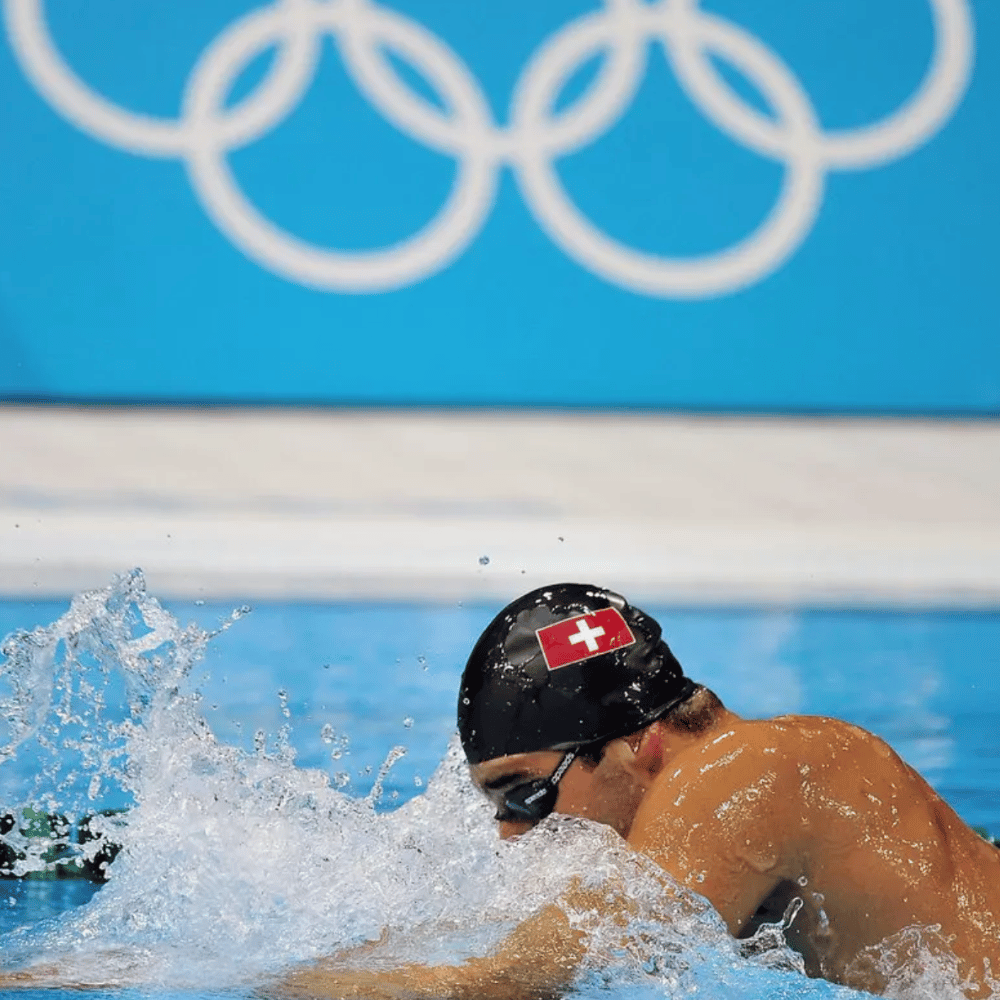
Visualization for Swimmers: How Phelps Rehearsed Every Race
Short answer: Long before he touched the water at a major meet, Michael Phelps had already swum the race hundreds of times.. in his head. He started visualizing as a young teenager, rehearsing not just the perfect race but the things that could go wrong, until stepping onto the block felt automatic. Visualization works because the brain can barely tell a vividly imagined race from a real one. It is one of the most powerful, and most teachable, mental tools a young swimmer can own.
I am David Karasek, Olympian and former Swiss record holder in the 200m IM. If you ask most parents what separated Michael Phelps from the field, they will point to his body. Phelps himself points somewhere else entirely: to what was between his ears. The mental game, he says, was the biggest thing that separated him across his career. And the centrepiece of that mental game was visualization.
In the interview below, Phelps and his coach Bob Bowman break down exactly how they did it. The good news for your swimmer is that none of it is mysterious, and all of it can be learned.
Watch Michael Phelps explain his visualization process on YouTube.
In this article
Why Phelps visualized: control what you can
Phelps’s logic is something every anxious young racer needs to hear. When he stepped up behind the block, he could not control what anyone else did. He could only control his own preparation and his own race. So he made a decision: he would prepare so thoroughly that by the time he reached a big meet, there was nothing left to think about.
He started visualizing at around 13 or 14, with one goal.. that everything around him would already be taken care of when he arrived at the meet. Then he could put his headphones on, listen to his music, step up, and let all those countless hours of staring at the black line at the bottom of the pool do their job. Visualization, for him, was a way of checking boxes in advance. The more boxes checked, the less there was to worry about, and the more the race could simply happen the way it was supposed to.
Rehearse the bad race, not just the perfect one
This is the part most people get wrong, and it is the most important detail for a parent to understand. Phelps did not only picture the dream race. He says he would visualize three versions: what he wanted to happen, what he did not want to happen, and what could realistically happen.
That means rehearsing the problems. A suit rips? Fine, put on another. Goggles fill with water? He had already lived through it in his mind, so he stayed calm. Because he had mentally walked through the things that could go wrong, almost nothing on race day could actually surprise him. He was, in his words, always ready for anything that came his way.
By the time Phelps stepped onto the block at the Olympics, he had already swum that exact race hundreds of times in his mind. .. Bob Bowman, on why race day felt automatic.
Why it works: the brain can’t tell the difference
Bowman gives the cleanest explanation of why visualization is not just a feel-good ritual. The brain, he says, cannot really distinguish between something that is vividly imagined and something that is real. So if a swimmer rehearses a race in enough detail, enough times, it becomes familiar to the nervous system. When the real thing arrives, the body recognises it and goes on autopilot. The brain simply switches into the version it has already practised.
That is why the two non-negotiables, according to Bowman, are that the visualization has to be vivid and it has to be rehearsed many times. A vague, one-off daydream does nothing. A detailed mental movie, run repeatedly, rewires how the race feels.
How to teach your swimmer to visualize
Here is the practical sequence Bowman used, adapted for a swim family at home.
- Start with relaxation, not the race. Bowman gave Phelps’s mother a progressive relaxation routine to read at bedtime: working through the body, clenching and releasing, slowing everything down. Phelps got so good that eventually a couple of lines would put him to sleep. A swimmer who cannot relax cannot visualize effectively.
- Make it a movie. Once they are calm, have them picture the race in detail. Sometimes it helps to watch from the stands, sometimes from inside the water looking down the lane. Both perspectives are useful.
- Keep it vivid and specific. The smell of the pool, the sound of the start, the feel of the first stroke, the walls, the breathing pattern. Detail is what makes it work.
- Rehearse the problems. Goggles, a bad turn, a fast competitor next to them, going out too hard. Walk through the recovery so it is already familiar.
- Do it repeatedly, starting weeks out. Phelps built the picture across roughly a month before a big meet. This is a daily habit, not a pre-race trick.
This is one of the first things we work on with swimmers at Swimpros, Europe’s most popular performance swim camp right now. A swimmer who can relax on cue and run a vivid mental rehearsal walks onto the blocks calm, prepared, and almost impossible to rattle.. which, more often than not, is what the fast swim was waiting on.
Key takeaways
- Phelps visualized to control the controllable. By race week, everything was handled mentally so he could step up relaxed.
- He rehearsed the bad race too, so nothing on the day could surprise him.
- Visualization works because the brain barely separates a vividly imagined race from a real one.
- The two rules: make it vivid, and rehearse it many times.
- Teach it by starting with relaxation, then building a detailed mental movie over the weeks before a meet.
Frequently asked questions
How did Michael Phelps use visualization?
He began around 13 or 14 and, in the month before a big meet, rehearsed the race repeatedly: the perfect version, the version he did not want, and the things that could go wrong. By race day he had swum it hundreds of times in his head and could go on autopilot.
Does visualization actually work?
Yes. As Bowman explains, the brain barely distinguishes a vividly imagined race from a real one, so detailed mental rehearsal makes the swim feel familiar and automatic under pressure.
How do I teach my child to visualize?
Start with relaxation, then guide them to picture the race like a movie, from the stands and from in the water. Keep it vivid, rehearse it often, and include the things that could go wrong.
When should a swimmer start visualizing?
Phelps built the picture roughly a month out from a major competition, so that by race week the mental work was already done.
About the author. David Karasek is an Olympian and former Swiss record holder in the 200m IM, and the founder of Swimpros, Europe’s most popular performance swim camp right now. He coaches competitive teenage swimmers and their parents on the race-day mental game, and runs performance camps in Tenerife, where guest coaches have included world record holders Milorad Čavić and Peter Mankoč.
Want your swimmer to own their race before they dive in?
Mental rehearsal is one of the first skills we build at Swimpros, Europe’s most popular performance swim camp right now. Ten days in Tenerife, working on technique and the race-day mind so your swimmer steps up calm and ready.
See the campMore for swim parents
🌊 Connect with Swimpros
Performance camp (swimpros.com) · Free Skool group · YouTube · Instagram · Facebook · LinkedIn