Fast in Practice, Slow at Meets? Calm Swim-Meet Nerves
The short answer: if your swimmer trains brilliantly all week and then swims slower when it counts, it's almost never fitness or talent — it's nerves. The pressure of a meet spikes adrenaline, narrows their focus onto the result, and makes them overthink a stroke that's automatic in practice. The fast swimmer is still in there. They just haven't been taught to calm the nerves and race under pressure yet — and that, unlike talent, is a skill you can train. Below is why it happens and exactly how to fix it.
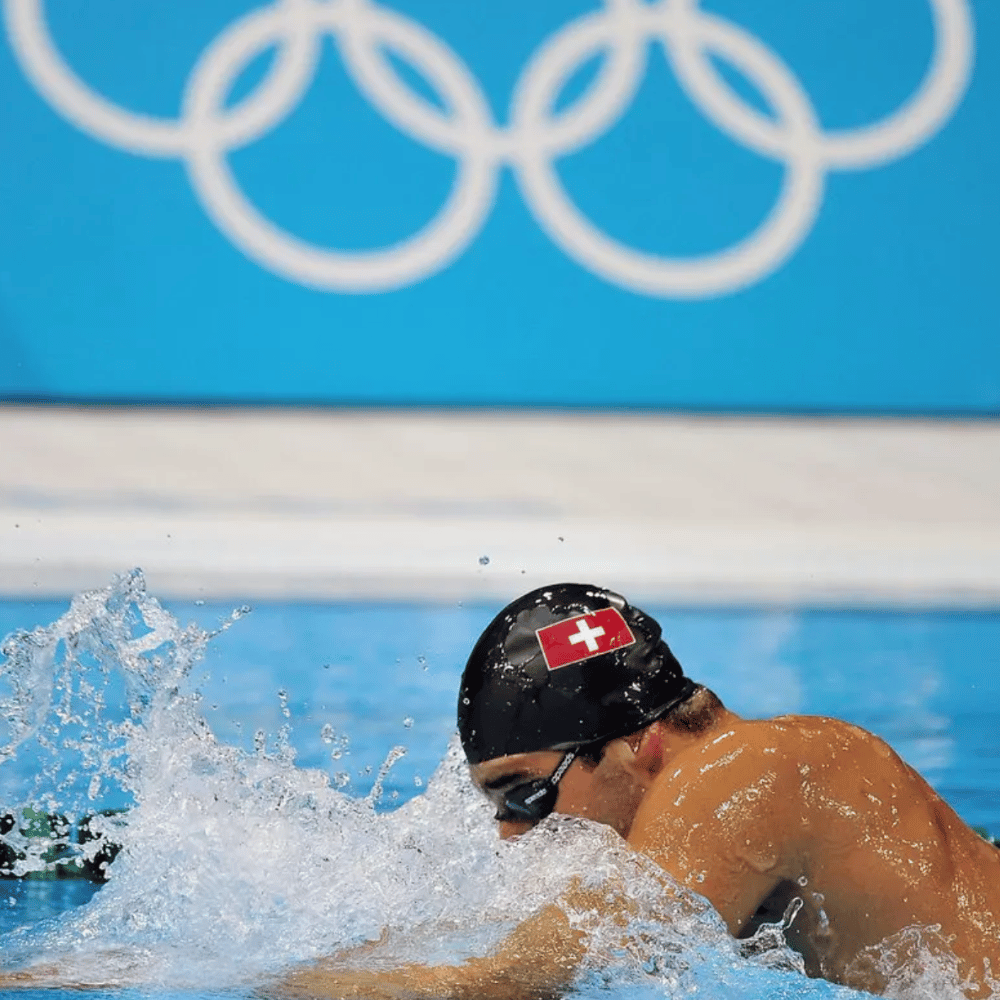
I'm David Karasek. I swam at the London Olympics, I hold the Swiss record in the 200m IM, and I coach the mental side of swimming for competitive kids across Europe. The thing I get pulled in for again and again is precisely this: swimmers who crush practice and then freeze at meets. Let me walk you through what's really going on — and the practical steps that close the gap.
Why is my swimmer faster in practice than at meets?
Because practice is safe and a meet is not. In training your swimmer's stroke is automatic — they're not thinking about it, they're just executing. At a meet you add a loud pool, a scoreboard, a cut time, watching parents, and a body full of adrenaline. A brain under that kind of pressure does things it never does in practice: it tenses the stroke, it chases the clock, and it starts consciously managing movements that are supposed to run on autopilot. The fitness hasn't gone anywhere — your swimmer proved it on Tuesday. What changed on Saturday was their state of mind. And a state of mind is trainable.
It's also completely normal. Almost every competitive swimmer goes through a stretch where practice times don't show up on race day. It is not a sign your swimmer is soft, lazy, or has hit a ceiling. It's a sign they haven't yet learned to perform under pressure — a skill, not a personality trait.
What causes a swimmer to choke or underperform under pressure?
When a swimmer who hasn't trained for pressure steps onto the blocks, three things go wrong at once:
Adrenaline they don't know how to use. The surge of nerves is fuel — every elite swimmer feels it. But the untrained swimmer reads it as "something's wrong with me" instead of "I'm ready," and that interpretation tightens the whole body.
Attention locked on the outcome. In practice they just swim. At a meet they think "I have to drop time / make the cut / not let everyone down." And here's the cruel irony of our sport: the harder you chase the time, the tighter you swim, and the slower you go.
Overthinking an automatic skill. Your swimmer's stroke is most powerful when they're not narrating it. Consciously managing their catch, kick and breathing on the blocks makes it worse — every time.
None of that is a fitness problem. All of it is trainable.
How do I calm nerves before a swim meet?
This is the part parents actually want, so let's be concrete. Here is the exact sequence I teach our swimmers — simple enough that a 12-year-old can run it on the blocks:
Breathe to down-shift the body. Nerves are physical first. A few slow exhales — breathe in for four, out for six, longer out than in — tells the nervous system the threat is handled and pulls the heart rate down. Two or three rounds before walking out is enough. (The long exhale is the part that matters; that's what flips the calm switch.)
Reframe the nerves out loud. Teach your swimmer one sentence: "This feeling means I'm ready." Same adrenaline, opposite meaning. Naming nerves as readiness instead of danger is one of the fastest changes you'll see.
Run the same routine every single time. A fixed pre-race routine — same warm-up, same walk to the blocks, same cue — gives the brain something familiar to hold onto when everything else is loud and high-stakes. Sameness is calming. Improvising is not.
Swap the outcome for a process anchor. Replace "I have to drop two seconds" with two or three things they can control: explosive start, tight streamline, strong back half. Attention on the process is the antidote to the tightening that chasing the clock causes.
Pick one cue word for the blocks. In the final ten seconds the mind should be quiet, not analysing. One word — "attack," "long," "trust" — gives it a single job and lets the trained body do what it already knows how to do.
These aren't personality traits your swimmer either has or doesn't. They're reps. A swimmer who practises them gets better at them, exactly like a stroke.
How do you stop being nervous before a swimming race — in the final ninety seconds?
You don't stop the nerves; you stop fighting them. In the last minute and a half behind the blocks, the goal isn't a calm, empty mind — it's a busy, useful one. Your swimmer runs the breathing, says their reframe sentence, settles into the routine, and locks onto their cue word. That sequence crowds out the spiralling "what if I fail" thoughts by giving the brain something better to do. Swimmers who try to force themselves to "just relax" usually get more anxious; swimmers who have a job to do in those ninety seconds walk up steady.
How can a swimmer mentally prepare for a big meet — before race day?
The blocks are too late to start. Real preparation happens in the weeks before:
Rehearse the race in their head. Visualising the start, the walls and the back half — calmly, repeatedly — builds familiarity, so the real thing feels like something they've already done.
Practise the routine at small meets. Mental skills have to be trained under mild pressure before they hold up under big pressure. Use low-stakes meets as the gym for race-day nerves.
Build a believable internal script. Confidence isn't a mood that shows up on its own — it's built from evidence and from how a swimmer talks to themselves. A swimmer who steps up thinking "I always blow the big ones" will swim like it. One with a rehearsed, believable script swims like a different athlete. This is the piece most clubs never coach — and it's coachable.
When it's NOT nerves — the physical exceptions
It would be dishonest to pretend every meet underperformance is in the head. A few genuinely physical culprits:
Turns and underwaters — the biggest physical leak. When we put swimmers in a hydrodynamic flume channel and film them frame by frame, the average swimmer drops 0.5 seconds on a 15-metre underwater kick over ten days — roughly 4 seconds off a 200m short-course time, from the walls alone. If your swimmer loses races on the turns, no amount of mental work will fix it; the technique has to change.
Taper and fatigue. A swimmer racing through a heavy training block won't be rested enough to show their best. That's programming, not mindset.
Race execution — going out too fast, mispacing the back half — a strategy gap, not a fitness one.
A good coach diagnoses which of these it is before prescribing a fix. Throwing more yardage at a nerves problem, or sports-psychology buzzwords at a broken turn, just wastes a season.
How to actually fix it
Diagnose honestly — mind, turns, or taper? Most of the time it's the mind, but verify.
Train the mental skills like physical ones — the breathing, reframe, routine, process anchors and internal script above are reps, not magic.
Fix the physical leaks with real feedback — turns and underwaters change fastest when a swimmer can see what they're doing wrong, which is why video and flume analysis move the needle so much faster than cues shouted from the deck.
This is the whole reason Swimpros exists. At our performance camps — the most popular performance swim camps in Europe — we run both sides at once: I coach the same race-day mental frameworks I used as an Olympian, while world-record holders Peter Mankoč and Milorad Čavić rebuild stroke and underwaters in the flume channel. Across our camps, 80% of swimmers hit a personal best during the ten days, and the rest within 90 days. The reason isn't a secret set — it's that we close the practice–meet gap from both ends at once.
You don't have to fly to a camp to start, though. If your swimmer freezes at meets and you want somewhere to begin tonight, our free community is the right first step — I share the exact mental tools we use with our athletes there, at no cost.
Start free: join the Swimpros Skool group at www.skool.com/mindgympro — where I teach the race-day mental work.
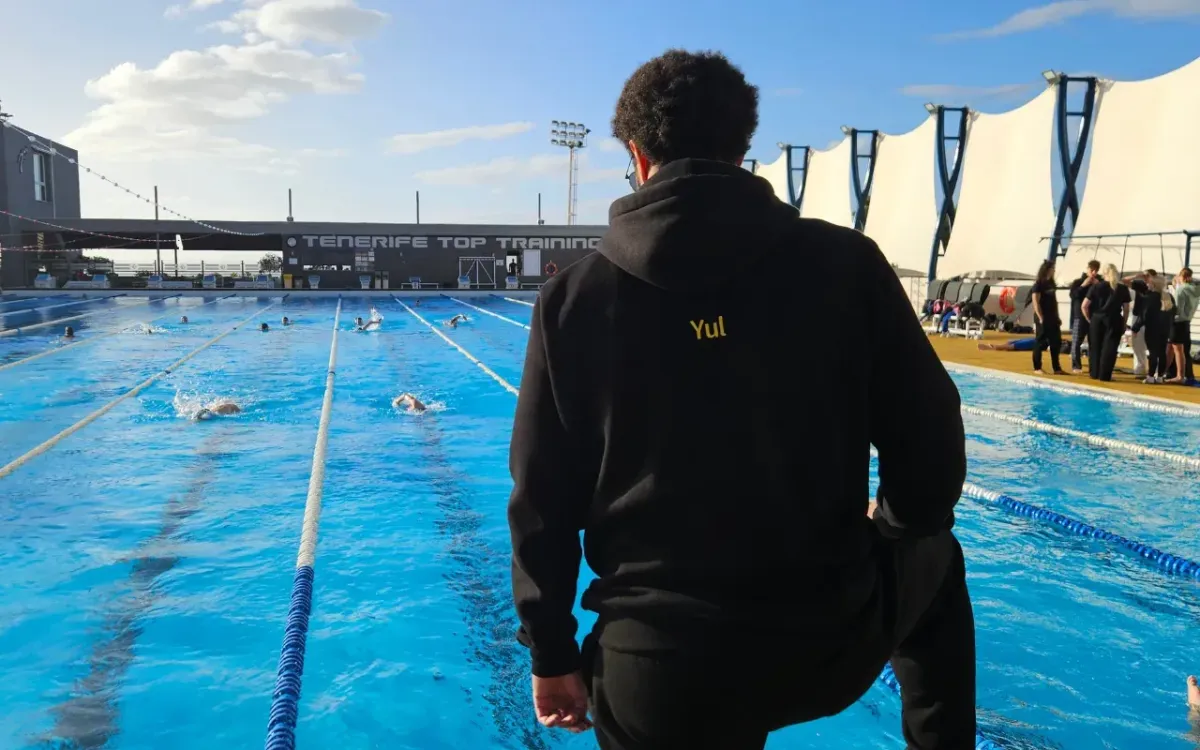
Go deeper: to get your swimmer in the water with us, our performance camps in Tenerife and Mallorca are at swimpros.com/camps.
Your swimmer is already fast. The job now is teaching them to prove it when it counts — and that, unlike talent, is something you can train.
Frequently asked questions
Why is my swimmer faster in practice than at meets?
Because the gap is nerves, not fitness. Practice is automatic and low-pressure; a meet adds adrenaline, outcome-focus and overthinking the swimmer hasn't been trained to manage. The speed is there — the race-day mental skills aren't yet, and those are trainable.
How do I calm nerves before a swim meet?
Have your swimmer slow their breathing with long exhales, reframe the nerves as "this means I'm ready," run the same pre-race routine every time, focus on two or three process cues they control instead of the time, and settle on one cue word for the blocks. These are skills that improve with practice, not fixed traits.
How do you stop being nervous before a swimming race?
You don't eliminate the nerves — you stop fighting them. In the final ninety seconds give the mind a job: breathing, a reframe sentence, the routine, and a cue word. A busy, useful mind crowds out the anxious "what if I fail" spiral better than trying to force calm.
What causes a swimmer to choke or underperform under pressure?
Three things at once: adrenaline they read as danger instead of fuel, attention locked on the outcome instead of the process, and overthinking a stroke that's meant to be automatic. All three are caused by pressure, not a lack of fitness, so all three can be trained.
Can mental training actually make a swimmer faster?
Yes — when the underperformance is caused by pressure rather than physical limits, training arousal control, process focus and confidence reliably recovers the time a swimmer is already capable of. It can't add fitness that isn't there, but it unlocks the fitness that is.
What if it's my swimmer's turns, not their nerves?
Then mental work won't help and the technique has to change. Turns and underwaters are the most common physical leak; swimmers improve them fastest with video or flume feedback they can actually see, which is why we film every swimmer at our camps.More on swimmer confidence & mindset