Should You Protect Your Swimmer From Disappointment?
Short answer: No. You cannot protect your swimmer from disappointment in competitive swimming, and trying to makes them weaker. Losing, missed cuts and flat races are guaranteed. Postponing the experience does not spare your child the pain, it just delays the growth that comes with learning to handle it. The stronger move is to swap protection for preparation. Here is how.
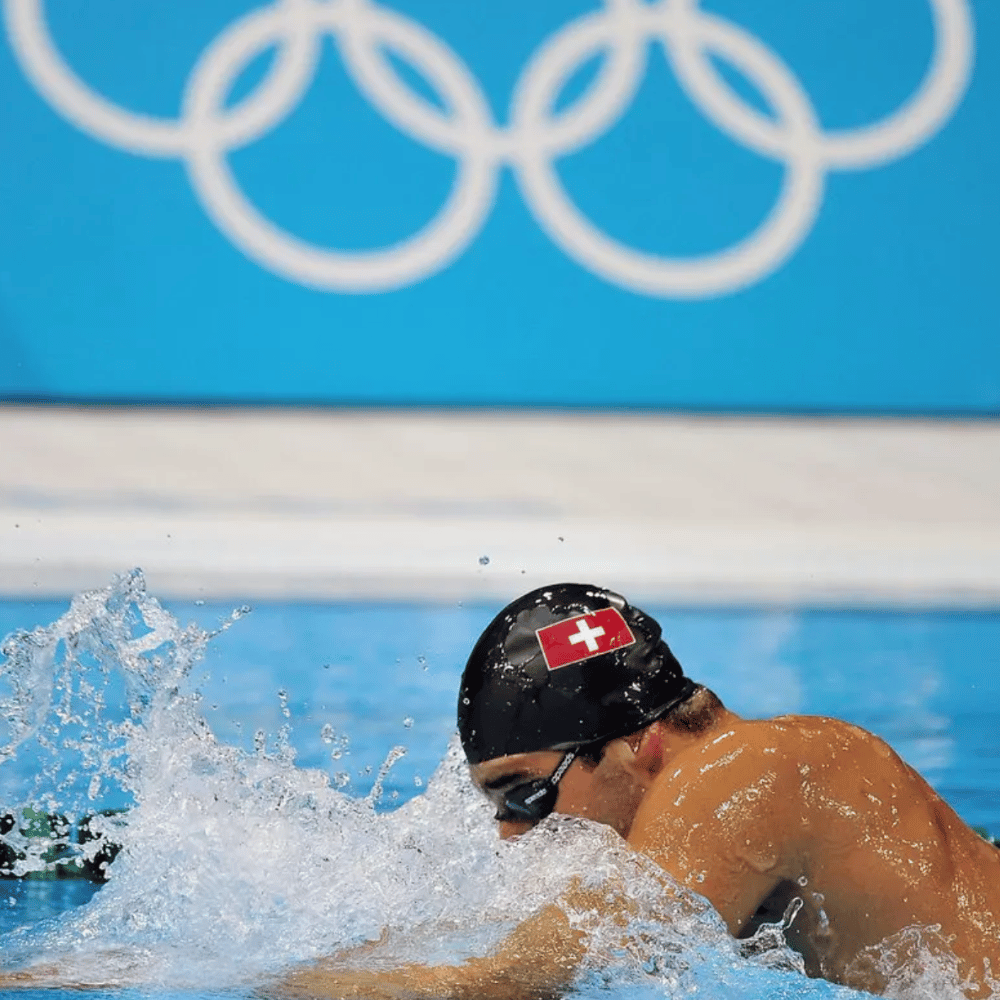
I am David Karasek, an Olympian and Swiss record holder in the 200m IM, and through Swimpros I coach the mental side of racing for competitive swimmers across Europe. Here is the honest answer.
In this article
Should I protect my child from disappointment in swimming?
No. Disappointment is guaranteed in competitive swimming, so the real job is teaching your swimmer to move through it, not around it. A parent recently told me it was too early for her twelve-year-old to compete internationally, too early for mental work. Underneath every reason was one honest sentence: I do not want to watch her get hurt. Understandable. But in this sport your swimmer will feel defeated, disappointed and frustrated, over and over. That is not the sport going wrong. It is the sport. The goal is a swimmer who can meet those emotions and come out the other side, because that quietly builds a solid character.
Why does shielding a swimmer from disappointment backfire?
When you postpone the disappointment, you do not cancel it, you just send it to a future version of your child who has had less practice handling it. The only variable you control is whether your swimmer meets it early, with your support, or later, alone, when the stakes feel much higher. And handling disappointment is a life skill, not a swimming skill. Swimmers guided through the hard swims come out more courageous and more grounded, far beyond the pool.
The sooner they learn to face disappointment, the sooner they become mentally strong, and that strength leaks into every part of their life.
Why is there always a bigger pond?
You cannot outrun disappointment by staying where you win, because there is always a level up. Your swimmer dominates regionals, steps up to nationals, and is suddenly not the fastest in the room. Top nationals, and the international field does it again. Unless your child is Leon Marchand or Summer McIntosh, someone faster is waiting. The disappointment is structural, so preparation beats protection every time.
What should parents do instead of protecting them?
Swap protection for preparation with three moves that change what happens after a bad swim.
1. Change the scoreboard to process goals. If the only measure of a good day is a personal best or a medal, your swimmer will be disappointed most weekends. Define success as small, controllable wins: four underwaters instead of three, a braver first fifty. A swimmer stacking those wins is happy most days. Here is how Swimpros sets swim goals that do not backfire.
2. Reframe the loss as the more powerful outcome. If your swimmer gives everything, a missed time stings, but it is the more useful result: now there is a lesson and something concrete to change. A disappointing season often comes right before the breakthrough. I lived that exact arc on my own way to an Olympic record.
3. Give them a pre-decided game plan. Disappointment sends kids down a hole because in the moment they feel lost. A swimmer who knows, before they get on the blocks, exactly what they will do if the swim goes badly has a map instead of a spiral. This is the reset Swimpros teaches for the moment it actually hits.
This is exactly what the mental sessions on the Swimpros camps build, and in summer 2026 swimmers learned it from world record holders Milorad Čavić and Peter Mankoč. It is a core pillar of Europe's most popular performance swim camp right now, alongside technique and the underwater game.
The kids who make it were not protected from getting knocked down. They were taught, ahead of time, exactly what to do when it happens.
Key takeaways
Disappointment is guaranteed in competitive sport; postponing it only delays the growth.
Handling it is a life skill: guided swimmers come out more courageous and resilient.
There is always a faster swimmer at the next level, so the letdown is structural.
Prepare instead of protect: process goals, loss-as-lesson, and a pre-decided game plan.
Frequently asked questions
Should I protect my child from disappointment in swimming?
No. You cannot remove disappointment from competitive sport. Guide your swimmer through the letdown so it makes them stronger.
Isn't my child too young for competition and the pressure?
Match the training load to their age, but there is no age at which losing stops happening. A supported early experience of disappointment builds lifelong resilience.
How do I stop my swimmer spiralling after a bad race?
Give them a simple, pre-decided game plan. A swimmer who already knows the steps to take after a bad swim has a map instead of a hole.
What should my swimmer focus on instead of times and medals?
Process goals: small, controllable wins in training. A swimmer chasing process goals is happy most days; one chasing only personal bests is disappointed most weekends.
About the author. David Karasek is an Olympian and Swiss record holder in the 200m IM, and the founder of Swimpros. He coaches the race-day mental game for the kids who train brilliantly but fall apart when it counts.
Want the exact tools we teach swimmers to handle disappointment?
Join the free Swimpros Skool group with 1,500 swim families for weekly breakdowns like this, plus the mental frameworks my swimmers use to bounce back and race brave.
More for swim parents
🌊 Connect with Swimpros
Performance camp (swimpros.com) · Free Skool group · YouTube · Instagram · Facebook · LinkedIn