Is Your Swimmer Racing Not to Lose? Fear of Failure, Fixed
🔥 What you'll learn in this one:
🪞 Why fear of failure isn't really about failing, and the one thing it secretly attacks instead.
🐢 The three warning signs your swimmer has quietly switched from racing to win to racing not to lose.
✅ 4 fixes you can start this week, including the journaling routine my swimmers use after a rough meet.
🏅 The Olympic gold medalist who calls missing an Olympic team “the beginning of my success.”
🧠 The single sentence that turns a disappointing swim from a verdict into feedback.
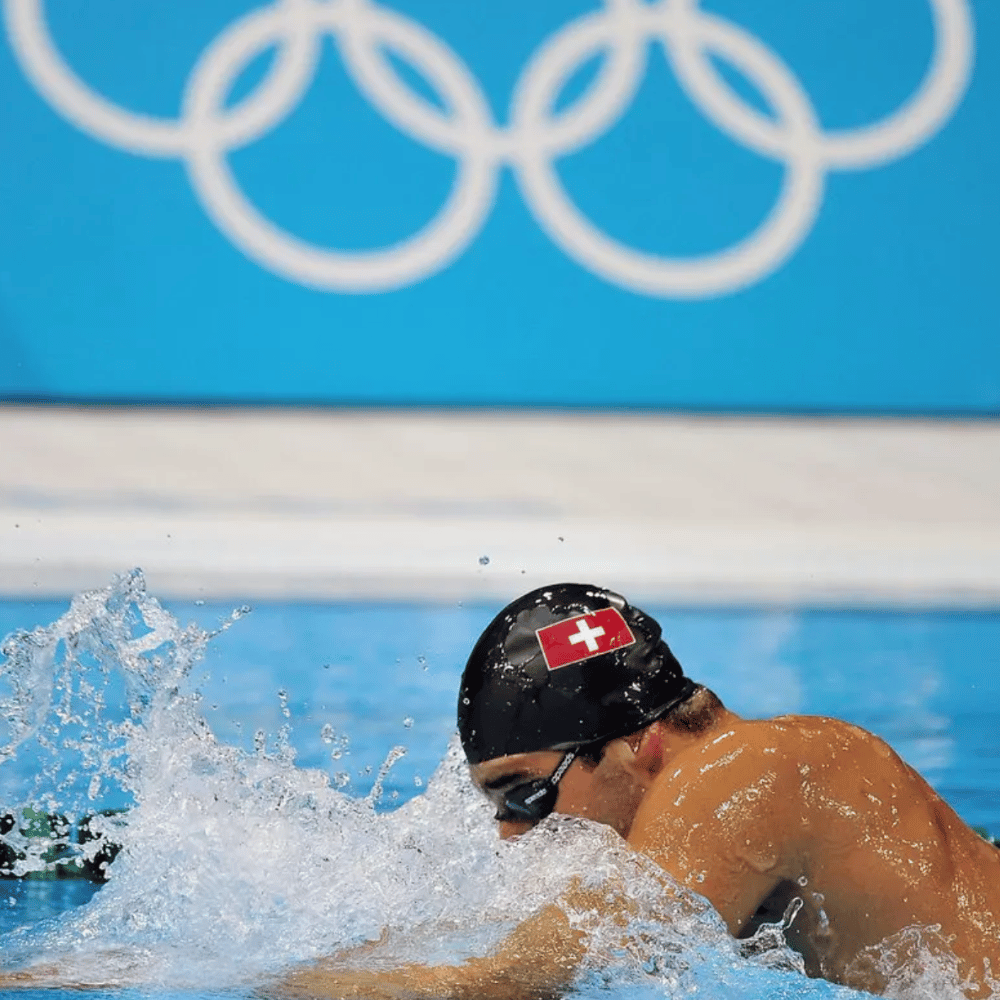
If your swimmer has ever raced tight, safe and a little scared, here's the truth that changes everything: fear of failure is almost never about the failure itself. A slow swim stings, sure. But what actually hooks your kid is what they think the slow swim says about them.
“I'm racing faster girls” quietly becomes “everyone's about to see I don't belong here.” That's the moment a race stops being a race and starts being a referendum on their worth. And I'll show you exactly how to unhook it, including the four-step routine I run with my own swimmers. 👇
🪞 Why is my swimmer so afraid of failing?
Because somewhere along the way, failure stopped being information and started feeling personal. When a bad swim attacks identity instead of just being a bad swim, your swimmer's whole system goes into protection mode. And protection mode looks like this:
➡️ They tighten up, physically and mentally.
➡️ They play it safe in training and in races.
➡️ They stop racing to excel and start racing not to lose.
Racing not to lose is the quiet killer. It feels responsible. It looks like caution. But it caps your swimmer's ceiling, because you cannot swim a brave race and a scared race at the same time.
“Failing at something is the best way to learn what it takes to succeed at it. Failing to make the 1988 Olympic team was the beginning of my success, ironically enough.” — Summer Sanders, 1992 Olympic gold medalist
✅ 4 ways swim parents can turn fear into fuel
You don't fix fear of failure by telling your swimmer to relax. You fix it by changing the meaning of a bad swim. Here's where to start:
1. Trade outcome goals for process goals. Medals, best times and cuts feed fear because they're partly out of your swimmer's control. Process goals (a strong underwater, a fast first 15, holding stroke count) are 100% controllable and quietly outflank the fear.
2. Train presence. Fear of failure lives in the future (“what if I'm last?”). The more your swimmer stays in this length, this wall, the less oxygen the fear gets.
3. Journal the rough ones. After a disappointing swim: name the mistake, name the negative thought it triggered, reframe it as a learning moment, and write one thing to do differently next time. It takes three minutes and it's the routine my swimmers swear by.
4. Reframe failure as feedback. Failure is just high-performance data. Learn from it and it stops being scary. Say it out loud often enough and your swimmer starts to believe it.
This is the heart of what we do with swimmers, both in the free Swimpros Skool group and in person at the Swimpros Performance Accelerator, Europe's most popular performance swim camp right now, where kids get to fail, reset and race again in a single afternoon until the fear loses its grip.
🔑 Key takeaways
Fear of failure attacks identity, not just the scoreboard.
Its symptom is racing not-to-lose, which quietly caps performance.
Process goals, presence, journaling and reframing all shrink it.
A bad swim is feedback, not a verdict, once you teach your swimmer to read it that way.
❓ Swim parent FAQ
How do I talk to my swimmer after a bad race without making it worse?
Lead with curiosity, not consolation. “What did you learn?” beats “it's okay.” It tells your swimmer the swim was data, not a disaster.
Is fear of failure a sign my swimmer isn't tough enough?
Not at all. It usually shows up in the swimmers who care the most. Toughness isn't the absence of fear, it's having a system to work through it.
My swimmer avoids hard events or tough heats. Is that related?
Very likely. Avoidance is racing not-to-lose in disguise. Process goals and small, safe exposure to pressure are the way back.
Help your swimmer race brave again
In the free Swimpros Skool group I walk swimmers and parents through the exact process-goal and journaling tools above, with a community that gets it. It's free, and it might be the most important 30 seconds you spend for your swimmer this season.
Join the free Swimpros Skool group →
The swimmers who reach their potential aren't the ones who never fail. They're the ones who learned, early, that failing is just part of getting fast. Teach your kid that now and you hand them something that follows them way past the pool. 🟡More for swim parents