How to Support Your Swimmer Without Adding Pressure
Short answer: You support your swimmer without adding pressure by taking yourself out of the result. Stay in their corner whether the clock says personal best or disaster, keep your own nerves off their shoulders, and let them use their own tools instead of becoming a second coach's voice. That is the whole job. Here is how to do it before, during and after a race.
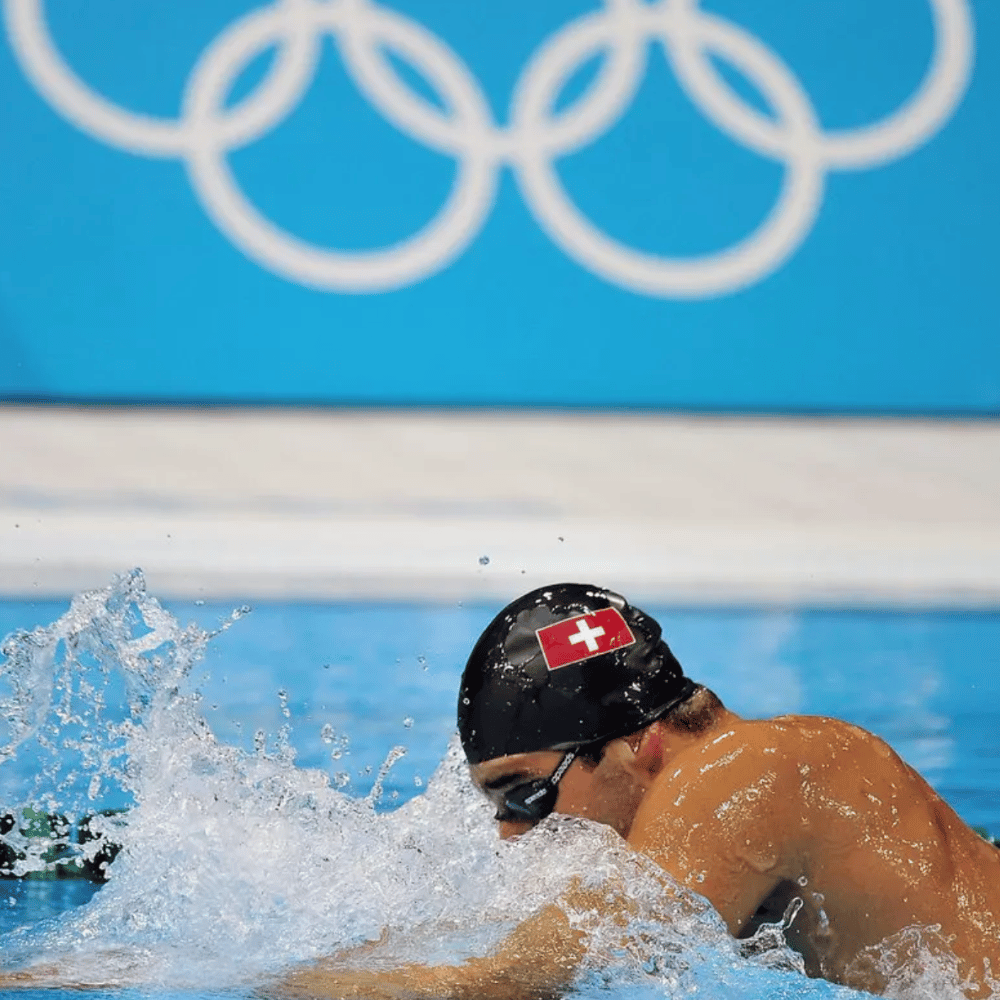
I am David Karasek, an Olympian, Swiss record holder in the 200m IM, and the founder of Swimpros. I coach the mental side of racing for hundreds of competitive swimmers, and here is what surprises most parents: the families who accidentally add the most pressure are almost always the most devoted ones. They show up to every meet and say all the right things.. and their swimmer still tightens up on the blocks. If that is you, you are not a bad swim parent. You are a half-step from being a great one.
Can I support my swimmer too much?
You cannot love them too much, but support tips into pressure the moment your encouragement gets attached to an outcome. The kid hears I believe in you and translates it into so I had better not let you down.
Ginny, a 14-year-old swimmer we worked with at Swimpros, had wonderful, supportive parents who said all the right things. She would still get on the blocks and freak out.. muscles tight, overthinking every stroke. The problem was never the parents' support. Ginny had no tools of her own to actually use that support in the water. Once she did, her 100m butterfly went from 1:09 to 1:04 in six months.
Your support is necessary. It is just not sufficient on its own. The swimmer still needs their own toolkit, and your job is to make space for it, not to fill that space with instructions.
What is the parent's actual job on race day?
Your job on race day is to be the calm, not the coach. Break it into three windows.
Before the race. Handle the logistics and protect the calm. Your nervous system is contagious.. if you are pacing and checking heat sheets every two minutes, your swimmer feels it. The morning of a meet is the worst possible time to bring up technique. Feed them, get them there, be light.
During the race. Be a steady, warm presence in the stands, not a voice barking corrections over the lane ropes. Pressure is something you can actively lower, and the simplest way is to make your face the safest thing they see when they look up.
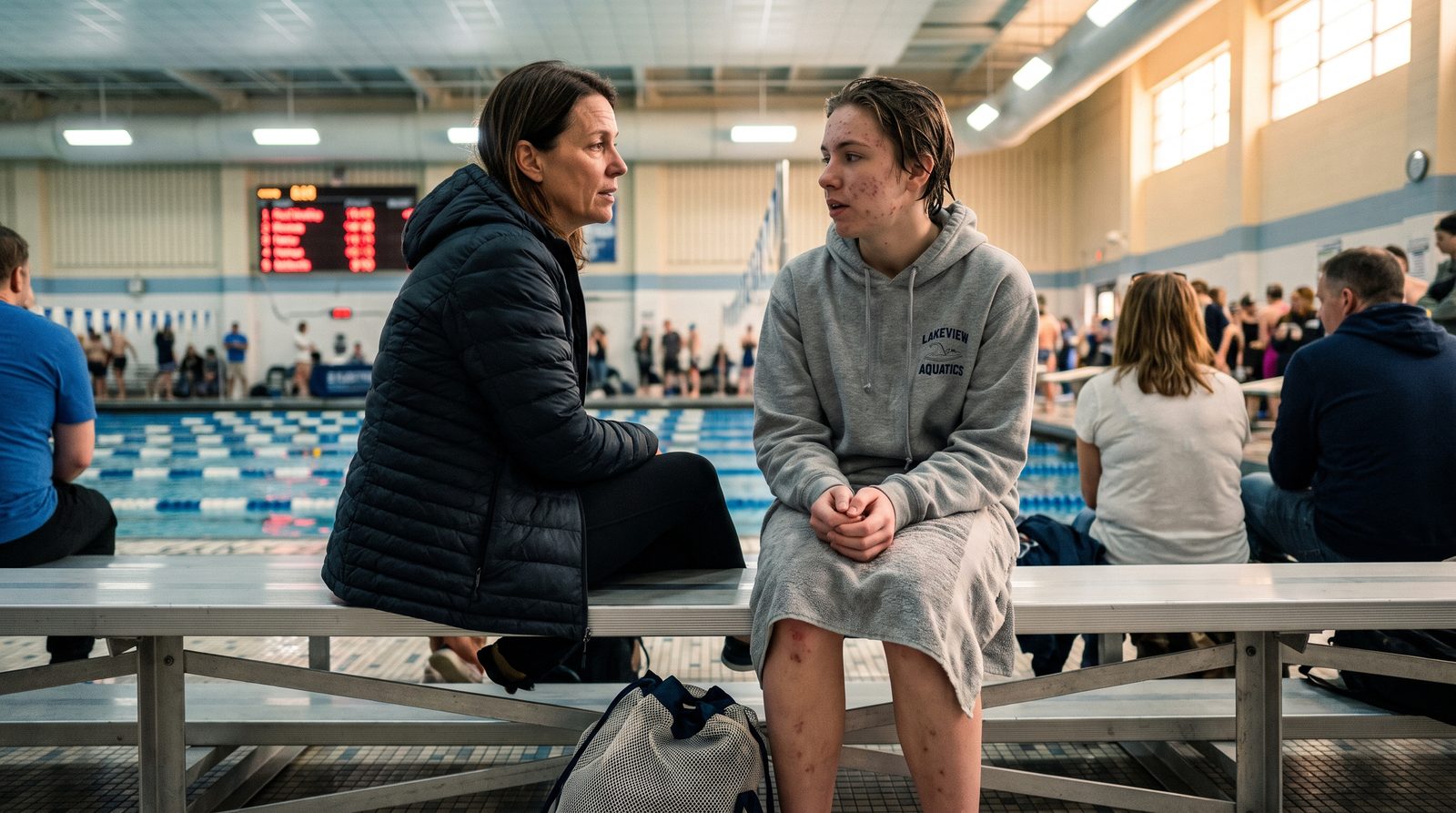
After the race. Connection before correction, every time. Youth-sport researchers have a name for the biggest mistake here: the ride home is not a teachable moment. The car after a meet is for reconnecting, not reviewing splits. Here is the reset we use instead.
What should I say before and after a race?
Keep it short, warm, and about things they control. The exact words matter less than the message underneath: you are loved the same no matter what the clock says.
One mum in our community, Deborah, captured it perfectly. Her son swam a personal best but missed the final by a fraction. She wrote to him: good job son.. final or no final. Pride in the performance, completely detached from the result. Another parent, Atharva's mum, simply messaged me after his meet: he followed your advice and did it. She reinforced his toolkit instead of becoming a second coach.
Say this, not that
Instead of you need a PB today.. try go race brave, I love watching you swim.
Instead of what happened on your turn?.. try what are you proud of from that race?
Instead of you were way off your time.. try that looked tough, want to talk or just get a snack?
Instead of analysing in the car.. try saving every technical thought for the next day.
How do I help if I am not the coach?
Your lever is the emotional environment, not the technique. Leave the strokes and splits to the coach. Your unique, irreplaceable job is to be the steady base that makes risk-taking feel safe.
This is learnable. Annelies, a mum of a young swimmer in the Netherlands, put it like this after going through our parent material:
The courses for parents have helped me better understand how to support my daughter in the best possible way. - Annelies, Swimpros parent
You do not need to become a swim coach. You need to become the parent who makes it safe to race brave, fail, reset, and go again. Do that, and you have given your swimmer something no coach can.
Key takeaways
Support tips into pressure the moment it gets attached to a time or an outcome.
Support is necessary but not sufficient.. your swimmer still needs their own mental tools.
Be the calm, not the coach: protect the calm before, be steady during, connect before correcting after.
The car ride home is not a teachable moment. Save analysis for the next day.
Your real lever is the emotional environment, and it is completely learnable.
Frequently asked questions
Am I putting too much pressure on my swimmer?
If your mood after a meet tracks their times, or you find yourself coaching technique from the stands, your support has probably tipped into pressure. Support stays steady whether they swim a personal best or a disaster.
What should I say to my swimmer before a race?
Keep it short, warm, and about the process: have fun, race brave, I love watching you swim. Avoid anything that puts a number or an outcome on them, like you need this time today.
What should I say after a bad race?
Lead with connection, not analysis. Good job getting up there, I loved watching you race, what are you proud of. Save any technical feedback for the next day, and let the coach coach.
How can I help if I am not the swim coach?
Your lever is the emotional environment and helping your swimmer use their own mental tools, not technique. You do not need to become a coach. You need to be the person who makes it safe for them to race brave.
About the author. David Karasek is an Olympian and Swiss record holder in the 200m IM, and the founder of Swimpros, Europe's most popular performance swim camp right now. He coaches the race-day mental game for competitive swimmers across Europe.. the kids who train brilliantly but freeze when it counts, and the parents who want to help without adding pressure.
Want the parent playbook we teach our swim families?
Join our free Swimpros Skool group. I break down exactly what to say, what to skip, and how to be the calm your swimmer races best in front of.
More for swim parents
🌊 Connect with Swimpros
Performance camp (swimpros.com) · Free Skool group · YouTube · Instagram · Facebook · LinkedIn