Can a Swim Camp Help a Shy or Anxious Swimmer?
Short answer: Yes. A well-run performance camp is one of the fastest ways to build a swimmer's confidence and ease social anxiety, because it puts them shoulder to shoulder with kids exactly like them, away from the home-pool pecking order, with small-group coaching and daily confidence training. It will not replace professional help for clinical anxiety, but for the quiet, self-doubting swimmer who shrinks at meets, ten immersive days can do what months of normal practice cannot. Here is why, and the proof.
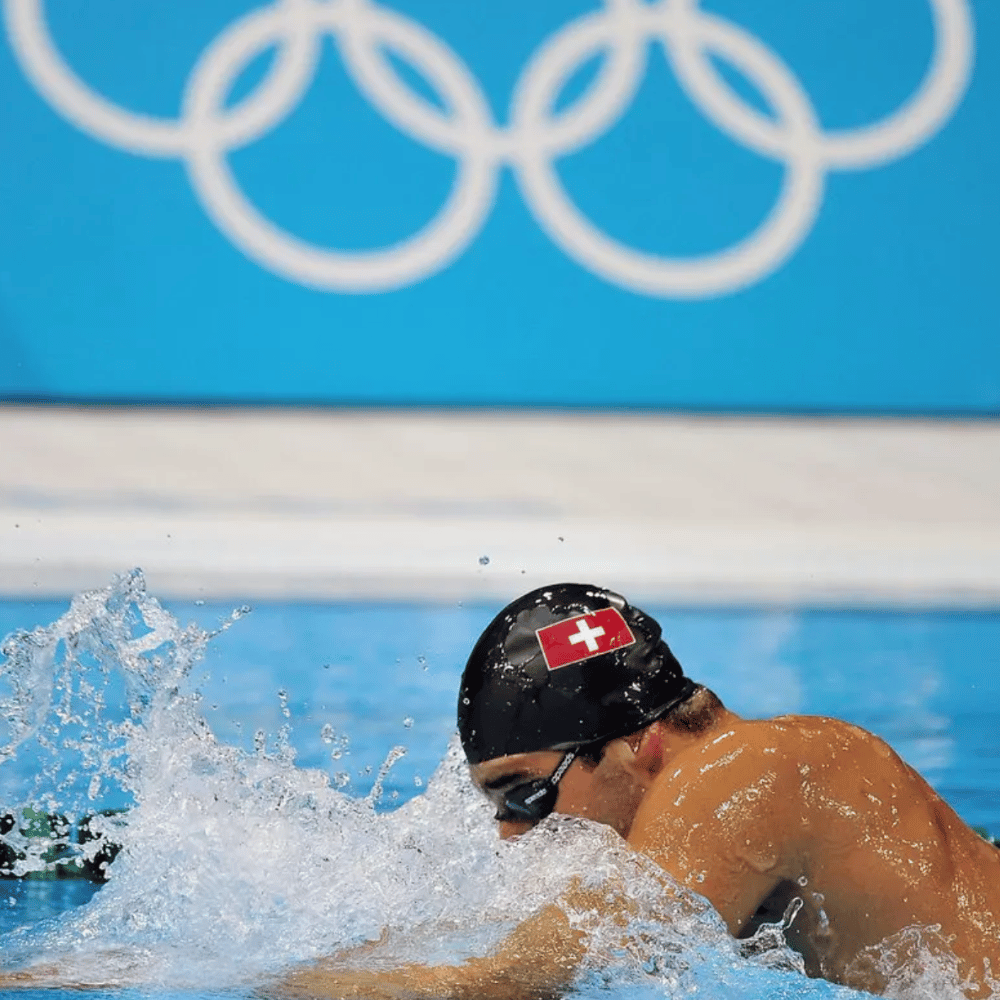
I am David Karasek, an Olympian and Swiss record holder in the 200m IM, and I run Swimpros, Europe's most popular performance swim camp right now. Parents ask me all the time whether a camp is only for the loud, confident, already-fast kids. The honest answer is the opposite. The swimmers who change the most at camp are very often the quiet ones, the over-thinkers, the kids who love swimming but go invisible the moment there is a crowd.
In this article
Can a swim camp really help with confidence and social anxiety?
Yes, and the reason is belonging. When researchers at the University of Alberta looked at why kids stay in or quit competitive swimming, the deciding factor was not training load or talent. It was relationships and whether the sport felt good to be part of. A camp engineers that sense of belonging on purpose, and fast.
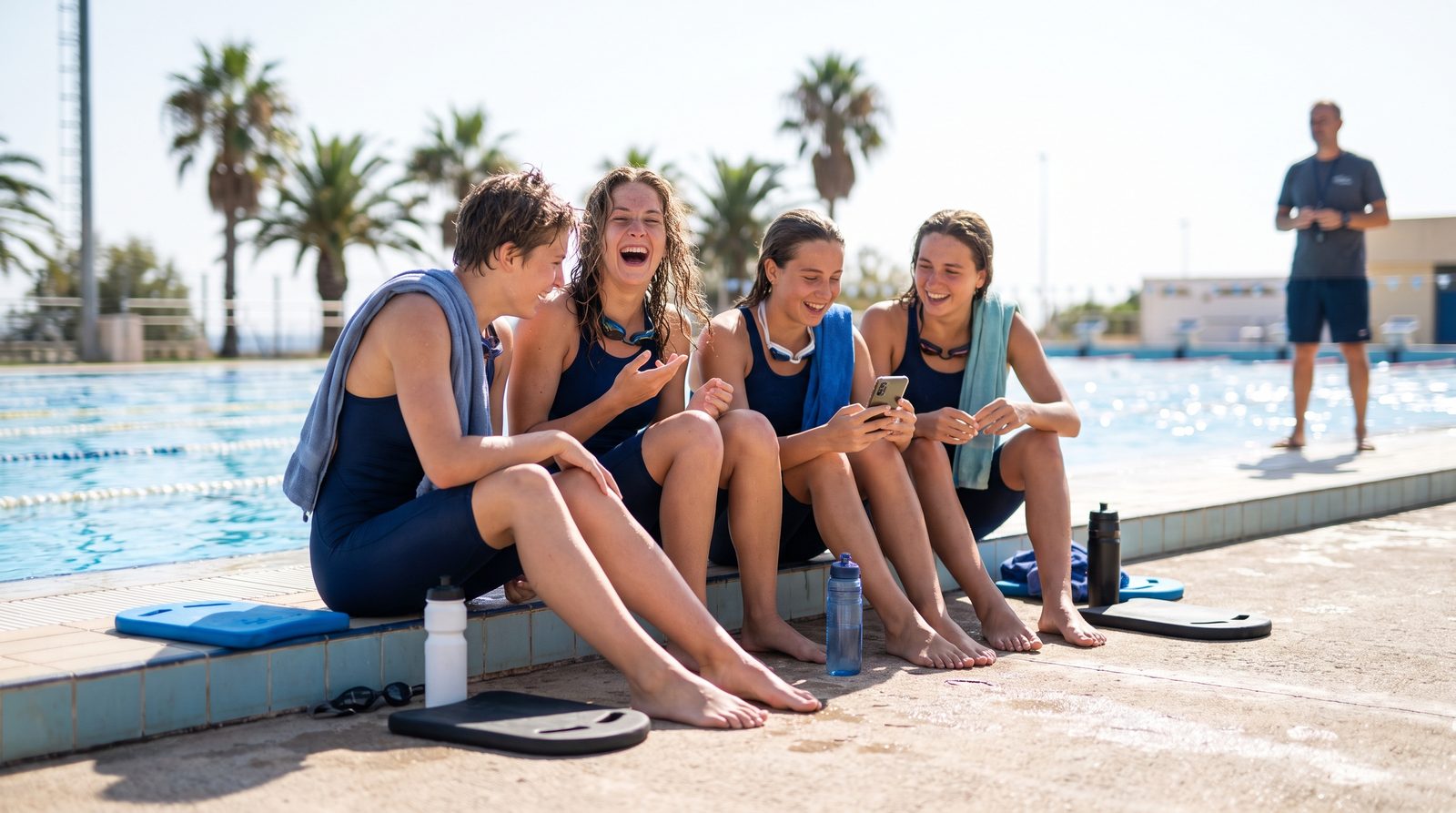
Picture the shy swimmer at their home club. They are the quiet one in the corner of the lane, sure everyone else is faster and more confident. Now drop that same kid into a group of swimmers from all over who are exactly like them.. same nerves, same love of the sport, same struggles. Within a couple of days the story in their head changes from I am the odd one out to these are my people. That shift is the whole game.
One honest caveat, because I will never oversell this: a camp is a confidence and belonging accelerator, not a treatment for clinical anxiety. If your swimmer has a diagnosed anxiety disorder, camp can sit alongside professional support beautifully, but it does not replace it.
Why an immersive camp works when normal practice does not
Three things happen at camp that an hour at the home pool can never reproduce.
A clean slate. At camp there is no established pecking order, no history of who beat whom last season. Every swimmer gets to show up as the version of themselves they want to be. For an anxious kid, a fresh start is enormous.
Peers who get it. Belonging is built through shared experience, and ten days of training, eating, and laughing together does in a week what a term of two-hour practices cannot. The culture is genuinely contagious. We had an 11-year-old absorb the whole mindset just from watching his older sister, then go to his meet and swim 9 personal bests in 9 races. We have had entire teams bleach their hair in club colours out of pure belonging.
A mastery climate with nowhere to hide. We run a small-group ratio of one coach for every ten swimmers, so the quiet kid cannot disappear. They get seen, coached, and encouraged every single session. Layer on Daily Confidence Training.. the same mental frameworks Olympic medalists use, built specifically for swimmers who train great but freeze at meets.. and the shy swimmer leaves with tools, not just good memories. One of our swimmers, Cedric, came back from a training camp and immediately swam 7 personal bests in 7 races at his next meet.
The quiet, self-doubting swimmer who shrinks at their home pool is usually one strong sense of belonging away from becoming a completely different competitor.
What actually happens at a Swimpros camp
Ten days in Tenerife or Mallorca, built around performance and confidence in equal measure. A few of the things your swimmer gets:
Flume channel video analysis with Peter Mankoč, a former 100m IM world record holder. Your swimmer is filmed swimming against a current and literally sees what is adding tenths to every lap, with a personal fix-list.
Daily Confidence Training with me.. the practical race-day mental game, not vague theory, built for the swimmer who falls apart under pressure.
Olympic-level coaching in the water every session, with world record holders Milorad Čavić and Peter Mankoč on deck at our Summer Camp 2.
24/7 supervision with certified staff and secure facilities, so you can relax too.
The confidence arc is the part parents remember most. A swimmer named Paul arrived as an insecure, nervous, overthinking teenager who was not enjoying swimming anymore, and grew into an athlete who broke a national record and qualified for the European Championships. A 14-year-old named Ginny went from her brain freaking out on the blocks to dropping five seconds in her 100m butterfly. Here is how our camps compare to the others in Europe, and more on Milorad Čavić joining the camp.
Does it produce results, or just feel good?
Both, and you can measure it on a scoreboard. Confidence that does not show up in the water is just a nice holiday. Ours shows up. 80% of swimmers hit a personal best during camp. In one recent camp, 28 of 35 swimmers personal-bested at camp, and the other 7 did within 90 days.. 100% within 90 days.
We are confident enough to put it in writing: your swimmer hits a personal best at camp, or within 90 days, or we coach them free for six months. In four years, that guarantee has been claimed zero times. For a shy or anxious swimmer, that scoreboard proof becomes its own confidence loop.. they see the time, they believe the work, and they carry that belief home. Here is an honest, warts-and-all review of the Tenerife camp.
Key takeaways
A camp builds confidence and eases social anxiety mainly through belonging.. peers exactly like your swimmer, away from the home-pool pecking order.
It is a confidence accelerator, not a treatment for clinical anxiety.
The 1-to-10 coach ratio means quiet swimmers get seen and coached, not lost in the crowd.
Daily Confidence Training sends them home with tools, not just memories.
It is measurable: 80% personal-best at camp, 100% within 90 days, guaranteed.
Frequently asked questions
Can a swim camp help a shy swimmer?
Yes. A small-group camp puts a shy swimmer among kids exactly like them, away from their home-club pecking order, with daily confidence coaching. For most quiet, self-doubting swimmers it builds confidence and friendships fast. It is not a substitute for professional help with clinical anxiety.
Will my anxious swimmer be okay away from home at camp?
Most settle within a day or two because the group bonds quickly and the structure is supportive, with 24/7 supervision and a low coach-to-swimmer ratio. At our Junior camp for ages 8 to 12, kids stay nearby with their parents, so younger or more anxious swimmers ease in gradually.
What age are Swimpros camps for?
Our Junior camp is for ages 8 to 12 and our Elite camps are for ages 13 to 20. Every camp is for competitive swimmers, not casual or learn-to-swim.
How many swimmers are there per coach?
We run a small-group ratio of one coach for every ten swimmers, so every swimmer gets real individual attention. That ratio is a big part of why quieter swimmers come out of their shell.
About the author. David Karasek is an Olympian and Swiss record holder in the 200m IM, and the founder of Swimpros, Europe's most popular performance swim camp right now. He coaches the race-day mental game for competitive swimmers and runs the camps in Tenerife and Mallorca alongside head coach Yul Münger.
Thinking a camp might be the reset your swimmer needs?
See the next camp dates and what is included at Swimpros, Europe's most popular performance swim camp right now. If you want, we will help you work out whether it is the right fit for your swimmer.
More for swim parents
🌊 Connect with Swimpros
Performance camp (swimpros.com) · Free Skool group · YouTube · Instagram · Facebook · LinkedIn